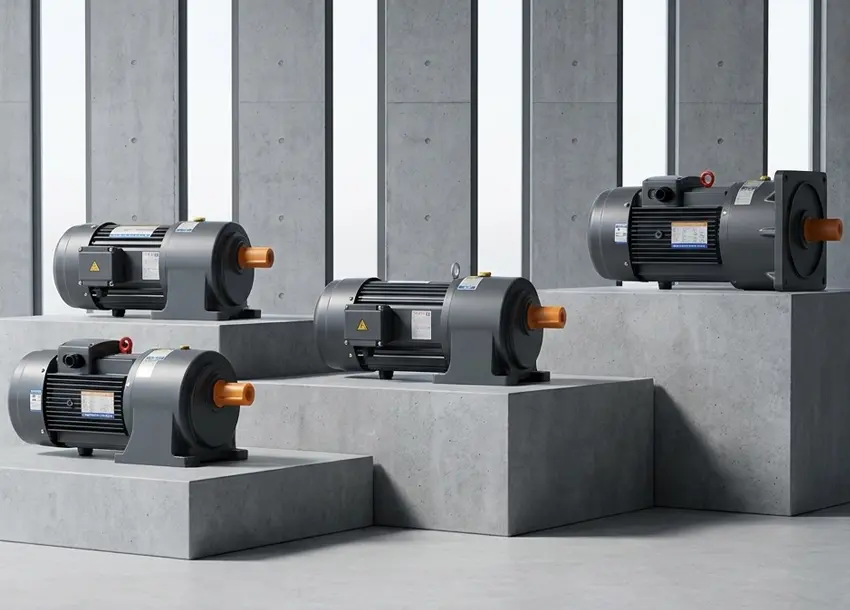
For servo-axis sourcing, CHBNS organizes Precision Planetary Gearboxes around the complete motion decision rather than a generic precision claim. As a China manufacturer with direct factory and supplier coordination, CHBNS uses the formal catalog to review product structure, selection rules, FAB and FB/FE family coding, performance tables, allowable radial and axial force, dimensional sheets, and motor installation. The final choice must connect motion profile, torque, inertia, ratio, speed, backlash category, input fit, output load position, mounting, environment, and the buyer's measurement plan.
Start with space, motor interface, output form, ratio, speed, inertia, shaft loads, reversal behavior, and acceptance needs. Use those constraints to decide which documented family and model row deserve detailed review.
The advantage comes from compact planetary transmission plus documented choices for family, stage, ratio, backlash, output, motor fit, load, and verification.
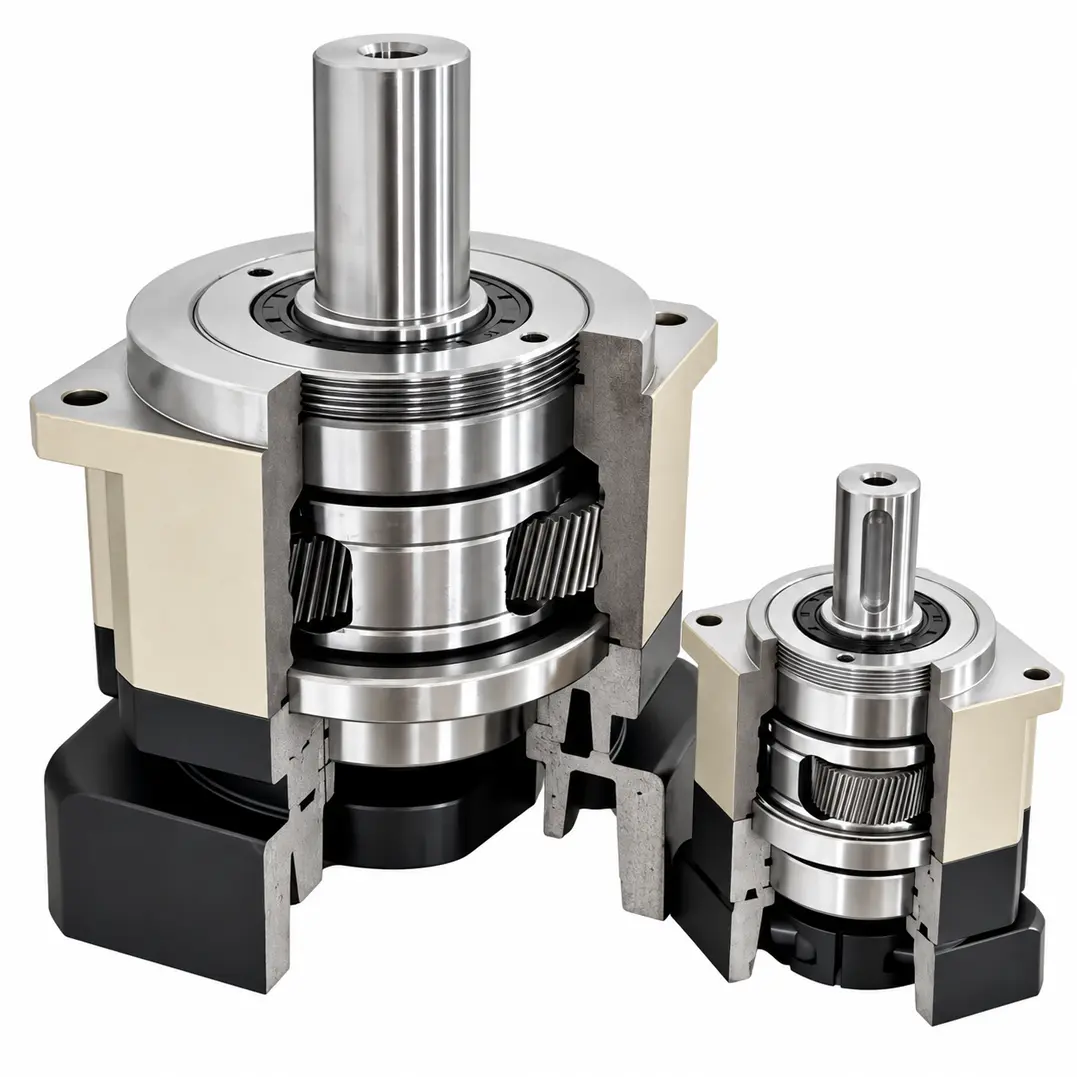
Sun, planets, carrier, and ring organize multiple tooth contacts around one axis. This architecture can combine reduction and torque transfer without a long offset gear train when the chosen model is correctly loaded.
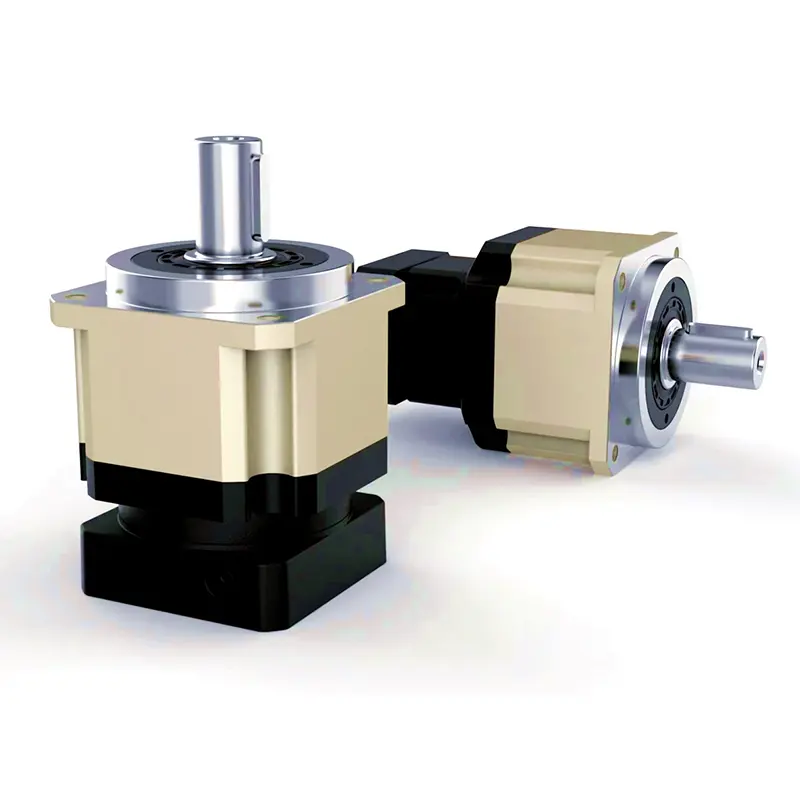
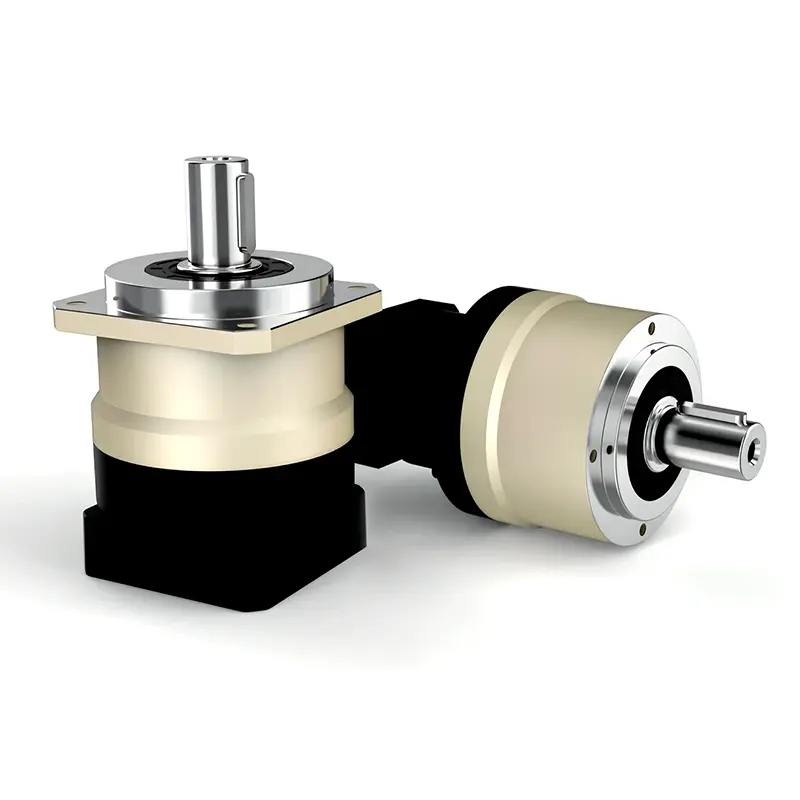
FAB and FB/FE sections provide separate coding, performance, force, and dimensional information, allowing the inquiry to start from a real family rather than an undefined universal gearbox.
Model-code examples, shaft forms, motor adapter references, outline drawings, and installation instructions make fit and assembly questions visible before the machine layout is frozen.
Backlash, torque, speed, inertia, shaft forces, efficiency, and dimensions are presented in structured catalog sections so a quotation can cite the exact row and its boundaries.
The 22-page formal catalog is the governing source. Product and component images explain appearance and architecture; they do not replace a performance table or outline drawing.
| Evidence item | Published or visible reference | Interpretation boundary |
|---|---|---|
| Catalog structure | Product overview, selection and announcements, model coding, performance, allowable output-shaft forces, dimensions, and motor installation | Use the section for the final family and size; do not combine unrelated rows into a synthetic configuration. |
| FAB family evidence | Separate model-code example, ratio lists, S1/S2 output codes, P0/P1/P2 backlash categories, performance tables, force charts, and dimensional sheets | Each value remains conditional on the selected FAB size, stage, ratio, output, and class. |
| FB/FE family evidence | Separate family imagery and dimensional/performance sections for documented configurations | Do not infer an FB or FE order code, ratio, backlash, load, or dimension from the FAB example. |
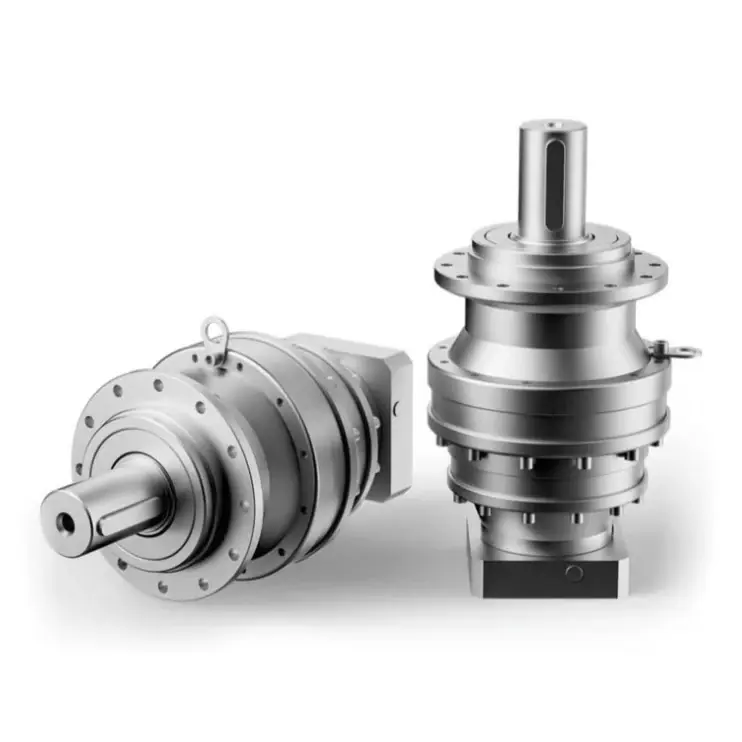
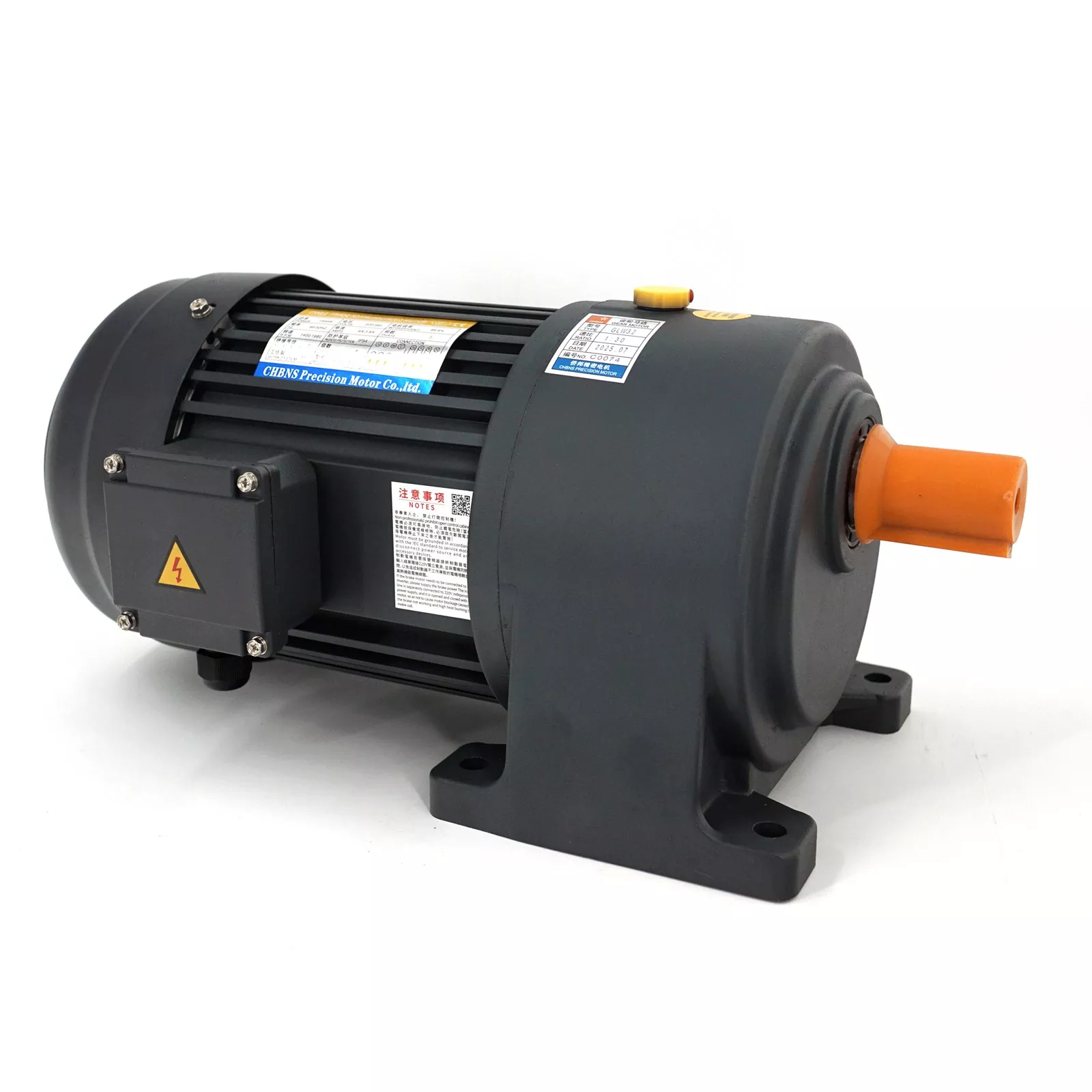
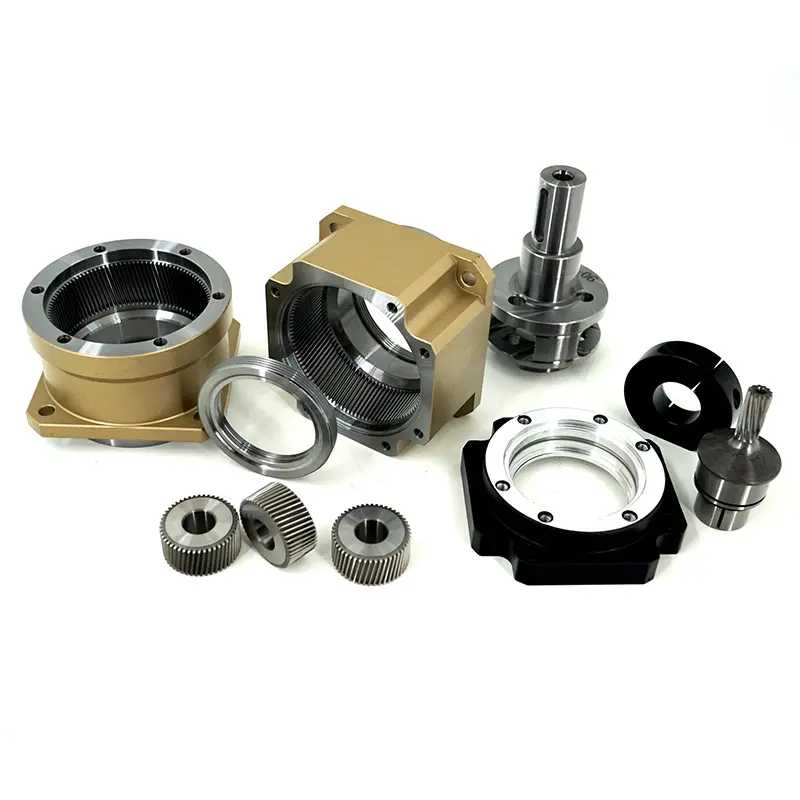
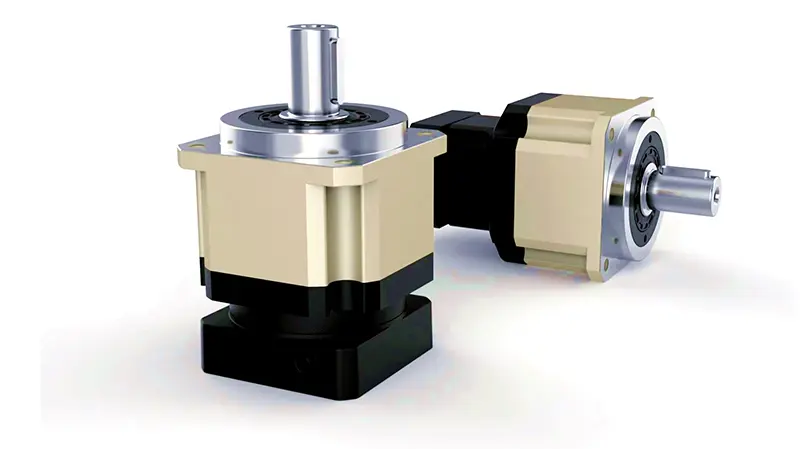
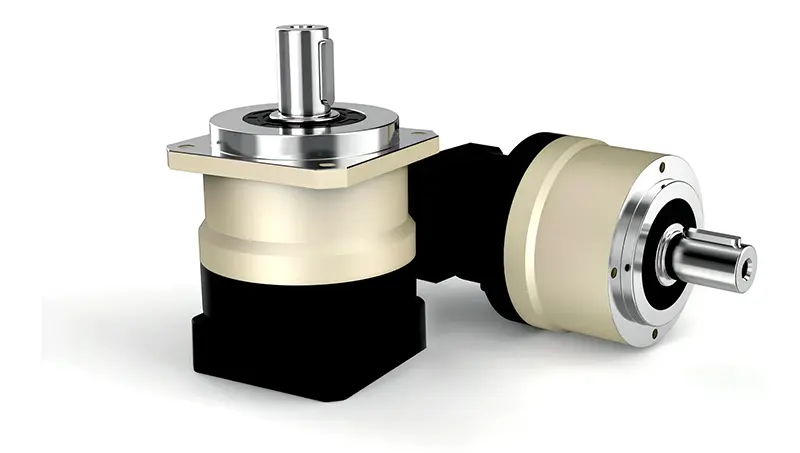
| Structural imagery | Local component layout, cutaway, FAB image, and FB/FE image | Images support architecture and interface discussion only. Exact material, treatment, bearing, class, and performance require the final documentation. |
Choose one documented family, exact size, stage, ratio, backlash class, input, output, and motor interface. Performance and dimensions are released only from that configuration's catalog row and approved drawing.
A precision reducer is useful only when its mechanical limits and errors are evaluated inside the whole motion chain.
Define travel or angle, cycle time, speed, acceleration, direction changes, dwell, settling window, process force, and emergency stop in measurable terms.
Combine driven inertia, continuous and peak torque, external radial and axial forces, load position, coupling, bearings, and acceleration duty at the reducer interface.
Review FAB, FB, or FE evidence for the required ratio, stage, backlash category, output form, motor adapter, dimensions, speed, inertia, and permissible loads.
Approve the order code, motor and load interfaces, drawing revision, installation method, lubrication, inspection points, report scope, and packing protection as one package.
Each application requires a different balance of precision, load, speed, inertia, mounting, environment, and service access.
Provide the full motion profile, settling requirement, payload, reflected inertia, mounting stiffness, controller behavior, and acceptance window.
Review registration error, web or process tension, direction changes, acceleration, line speed, thermal state, coupling, and contamination protection.
Do not isolate reducer backlash from bearing preload, screw or rack behavior, structure compliance, process force, feedback location, and compensation strategy.
Confirm load range, acceleration, braking, impact, cycle rate, mounting, environment, holding and safety functions, and service access before selection.
This is a sourcing-control comparison: one route preserves family, interfaces, loads, and acceptance evidence, while the other leaves those checks to the buyer. It is not a comparison among CHBNS models or against a named brand; a generic source remains viable when every interface and rating is independently validated.
Lower-feature external optionThe product may be described as precision without a clear family, stage, ratio, backlash class, or model code.
CHBNS review pathThe review begins with a documented family and preserves the exact selection variables through quotation.
Lower-feature external optionHeadline torque can be separated from cycle, acceleration, emergency stop, inertia, and shaft-load position.
CHBNS review pathMechanical rating, inertia, external forces, speed, ratio, and motion profile are checked together.
Lower-feature external optionA product image may stand in for the motor adapter, pilot, shaft, fastener, output, and service dimensions.
CHBNS review pathCatalog dimensions, installation instructions, and the final order drawing define the interfaces.
Lower-feature external optionPrecision, fit, and performance can remain sales descriptions without an agreed measurement basis.
CHBNS review pathThe factory workflow can connect measurable acceptance items to the quoted configuration and record scope.
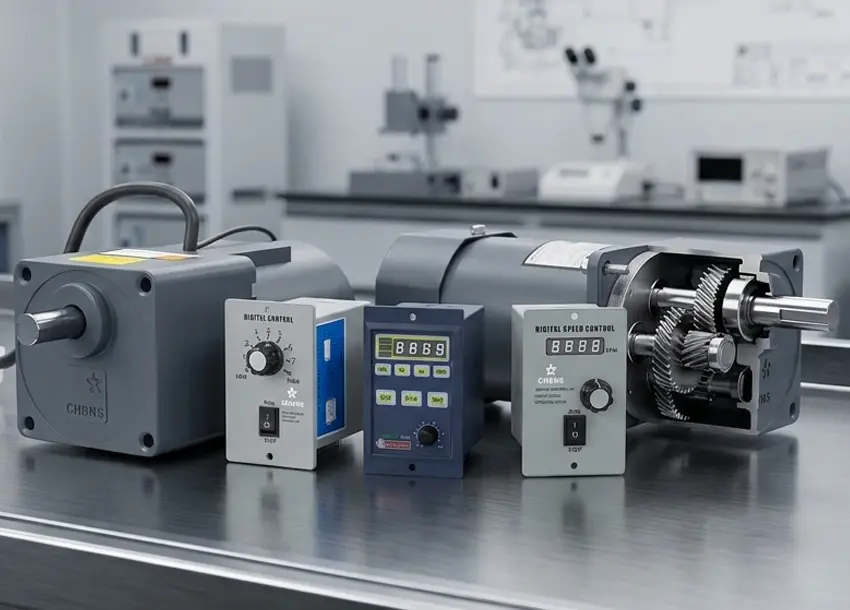
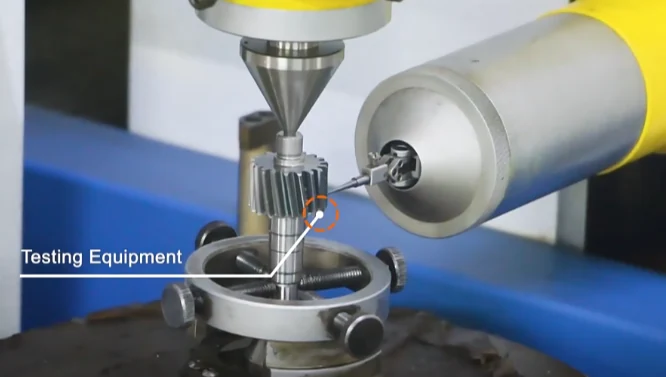
The component photograph and cutaway explain the planetary arrangement. The gear-inspection image shows factory process context. Neither proves the material, heat treatment, backlash, torque, stiffness, life, or acceptance result for an order; those facts require the final specification and agreed records.
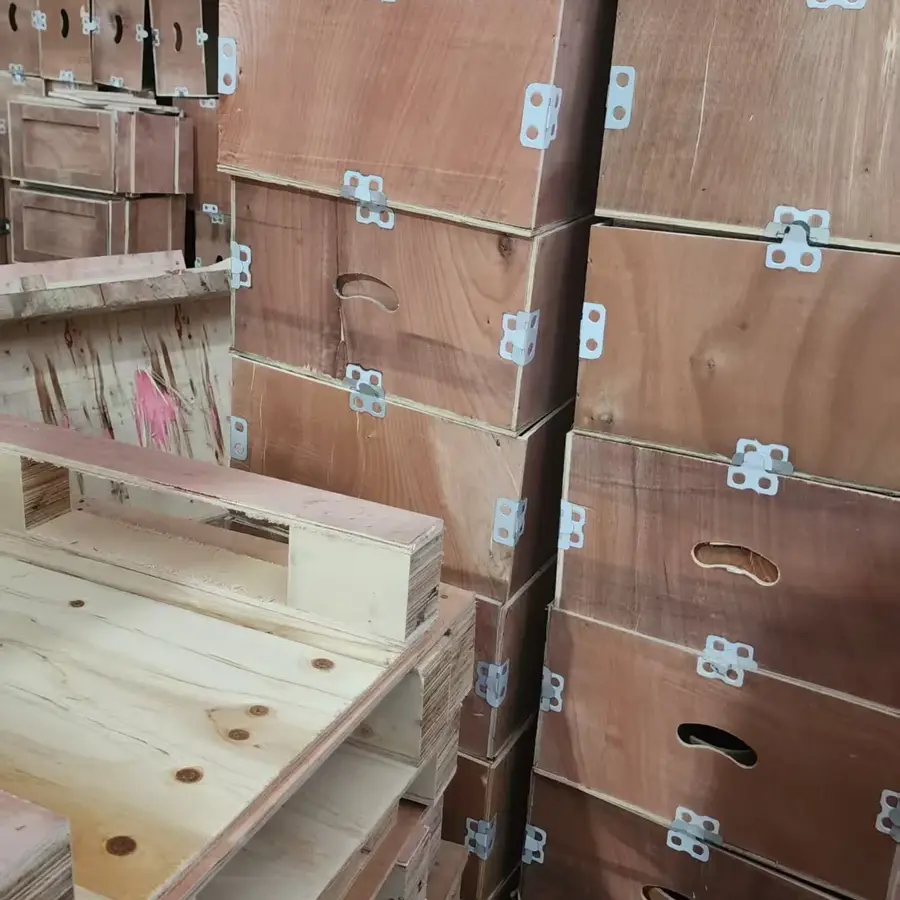
Confirm whether adapters, clamps, keys, fasteners, sleeves, cables, grease or oil state, plugs, and protective covers are included. Define individual protection, orientation, labels, quantity, destination, storage period, outer pack, and the documents placed inside or outside the crate.
The catalog controls selection values. The component guide explains structure but does not supersede the model tables.
The product decision is stronger when catalog evidence, local structure imagery, process context, drawings, and acceptance terms tell one consistent story.
FAB and FB/FE evidence can be reviewed without blurring their model codes, outputs, ratios, dimensions, or performance tables.
A customized inquiry preserves motion, load, inertia, interface, environmental, inspection, and packing requirements instead of reducing them to one product name.
A value is quoted only from the applicable row and drawing; unconfirmed compatibility or performance remains a question for review.
Send enough information to compare the documented configurations on the same motion, load, interface, and acceptance basis.
Answers remain conditional on the selected motor, controller, reducer, duty and order documents.
Compare the exact family, size, stage, ratio, backlash class, rated and peak conditions, inertia, radial and axial capacity, input and output interfaces, dimensions, installation method, and acceptance basis against the same axis duty. Do not compare headline values taken from different conditions.
Do not assume so. Their documented configurations, codes, dimensions, outputs, and performance information must be reviewed separately for the project.
No. Photographs support appearance or visible structure only. Materials, treatment, bearings, tolerances, lubrication, and ratings require controlled documentation.
It depends on motor speed and torque, output speed, motion time, reflected inertia, control margin, efficiency, stage availability, loads, and the complete operating profile.
Only if the sample configuration, drawing, measurement method, duty, environment, acceptance limits, report, and permitted production variation are all defined.
Address
No.785 Jiangnan Road, Nanmingshan street, Liandu district, Lishui City, Zhejiang Province , China.
Tel