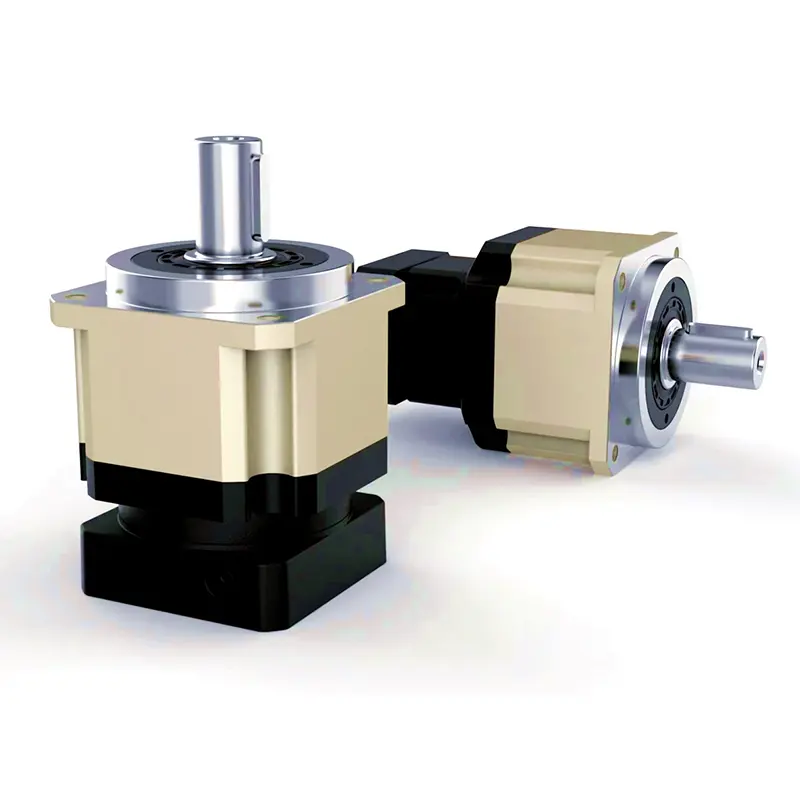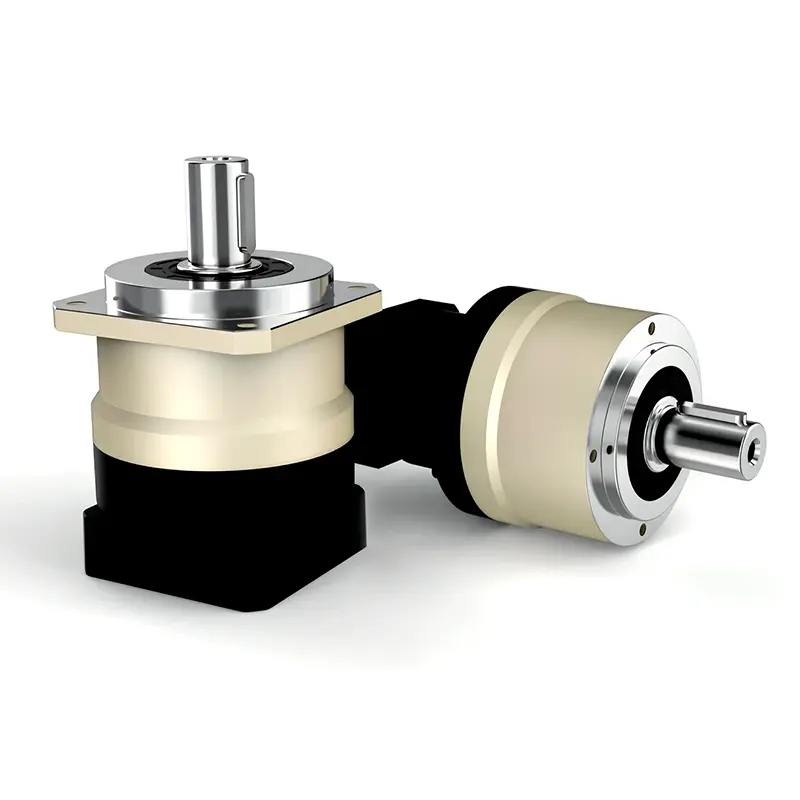
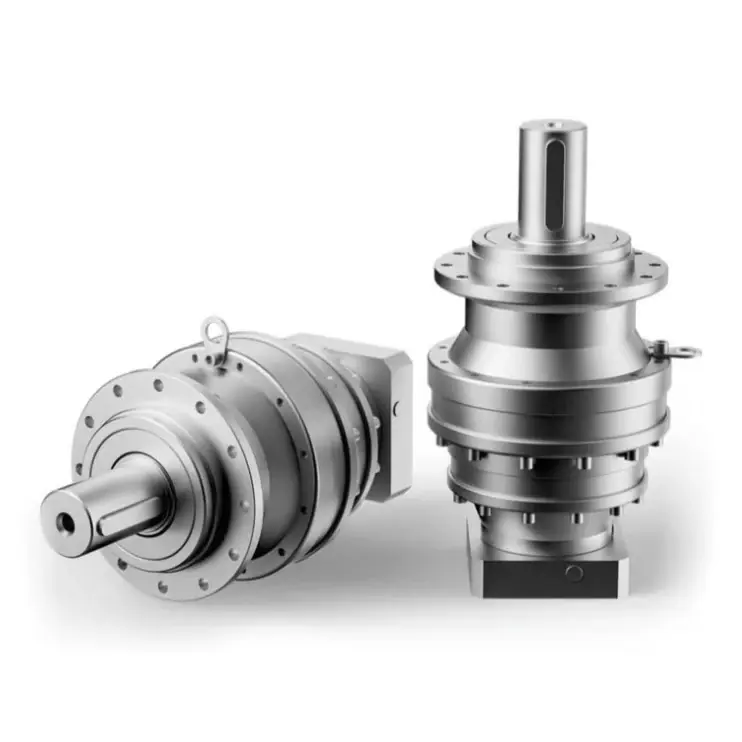
Built for duty-led industrial review, Industrial Planetary Gearboxes from CHBNS combine China manufacturer and factory engineering with supplier documentation rather than relying on a nominal torque label alone. The N-series catalog documents designation logic, service factors, mounting positions, thermal power, cooling options, normal output torque, shaft loads, adapters, dimensions, and oil quantity. A released unit still requires a confirmed size, stage arrangement, ratio, input, output, lubrication, environment, and acceptance plan.
Begin with continuous and peak load, operating hours, starts, direction changes, shock, radial and axial forces, ambient conditions, and the driven-machine safety function. Only then should a catalog row and mounting arrangement be shortlisted.
The strongest advantage is a compact coaxial load path supported by an unusually broad industrial selection record, not an unsupported universal torque claim.
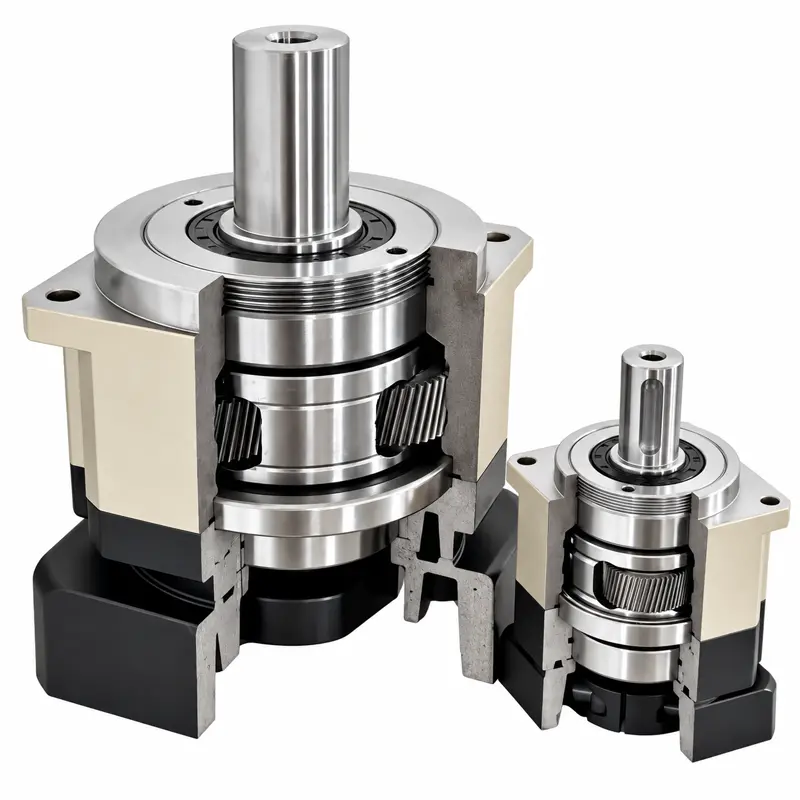
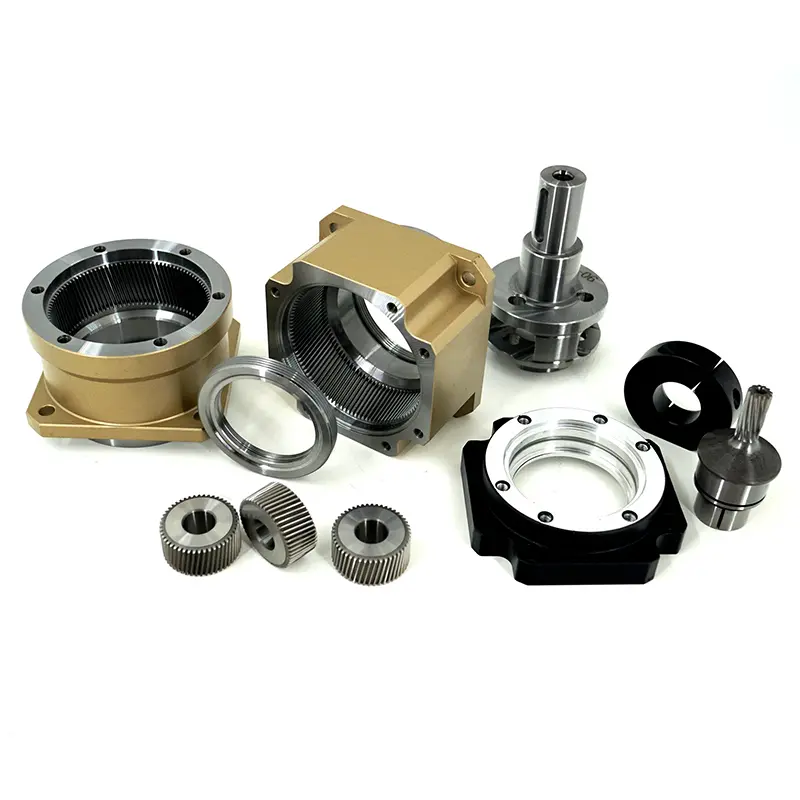
A sun, planet, carrier, and ring arrangement distributes tooth engagement around the axis, creating a compact route for transmitting substantial load when the selected size and stage are correctly matched.
Input and output remain centered in the primary arrangement, which can reduce offset interfaces and help the machine builder organize foundations, guards, couplings, and service clearance.
The formal N-series manual connects service factor, mounting, thermal power, cooling, shaft loads, adapters, dimensions, oil quantity, and model-specific tables in one document trail.
A drawing-led review can settle the input source, output connection, mounting face, external loads, reaction path, lubrication access, and lifting or handling needs before the surrounding steelwork is fixed.
The useful result is a traceable chain from machine duty to drawing, lubrication, cooling, and acceptance evidence.
Record the speed, torque, duration, starts, reversals, shock, and external shaft forces at the most demanding point instead of submitting only average power.
Choose the stage and ratio range, input adapter or shaft, output form, mounting position, reaction restraint, and service access against the machine drawing.
Review ambient temperature, running time, oil arrangement, cooling requirement, and orientation together; catalogue thermal information is not a substitute for the actual duty cycle.
Approve the order code, interface drawing, specified loads, inspection items, lubrication note, packing scope, and acceptance record before production starts.
The manual supplies a selection framework and size-specific tables. Values must be taken from the exact chosen row, not transferred between frame sizes or mounting arrangements.
| Evidence item | Published or visible reference | Interpretation boundary |
|---|---|---|
| Series identity | CHBNS N series planetary gear unit catalog, 63 PDF pages | This is the governing industrial-series source; precision FAB/FB/FE data is not used as N-series performance evidence. |
| Selection framework | Designation, technical definitions, selection example, service factors, and load classification | The project duty must be mapped to the correct definitions before a performance row is read. |
| Installation evidence | Mounting-position, cooling-system, adapter, solid-input-shaft, flange, torque-arm, dimension, weight, and oil-quantity sections | Availability and dimensions remain tied to the confirmed order code and drawing. |
| Performance evidence | Thermal power, normal output torque, hydraulic-brake data, radial-load and technical-data tables | No torque, speed, efficiency, thermal, or shaft-load number is released until the exact size, ratio, stage, speed, duty, and mounting condition are identified. |
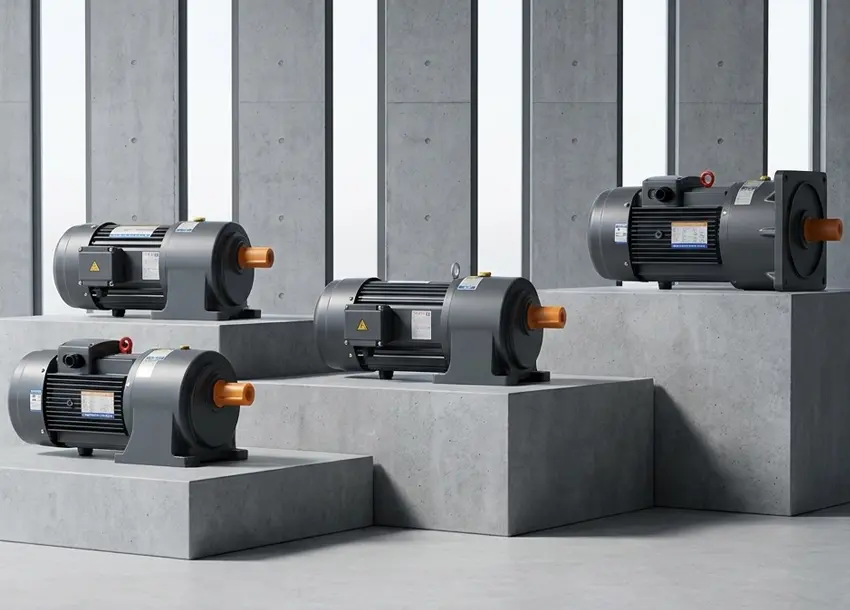
A catalog family picture and a generic planetary cutaway explain architecture only. The quotation must identify the exact N-series row, drawing revision, lubrication and cooling arrangement, and agreed inspection result.
These are application directions, not model approvals. Each machine still needs its own load, safety, thermal, and interface review.
Useful when continuous load, start condition, operating hours, shaft forces, mounting, and maintenance access are available for selection.
Review transient demand, radial and axial loading, duty duration, thermal condition, output connection, and seal environment before release.
Acceleration, braking, reversal, coupling behavior, foundation stiffness, and peak torque must be considered as a system.
Reducer selection does not replace a brake, load-holding device, overspeed protection, guarding, or machine-level risk assessment.
The reference case is a thin-documentation purchasing route, not another CHBNS model or a named company. An external unit can still be suitable when the buyer independently verifies its complete duty, interfaces, thermal basis, and release records.
Lower-feature external optionSelection may stop at nominal power or a headline torque without documenting shock, duration, starts, or external forces.
CHBNS review pathThe review converts the complete load case into service, thermal, shaft-load, and mounting checks.
Lower-feature external optionAdapters, couplings, reaction restraints, lubrication access, and guards may be divided among several vendors.
CHBNS review pathOne configuration record lists the input, output, mounting, reaction, access, and drawing boundaries.
Lower-feature external optionMechanical rating may be considered without a traceable mounting, ambient, running-time, oil, or cooling check.
CHBNS review pathThermal power and cooling sections are reviewed alongside the selected operating condition.
Lower-feature external optionA model label, drawing, lubrication note, and acceptance record can remain in separate revision chains.
CHBNS review pathThe factory quotation can keep order code, drawing, duty, inspection, and packing scope in one controlled trail.
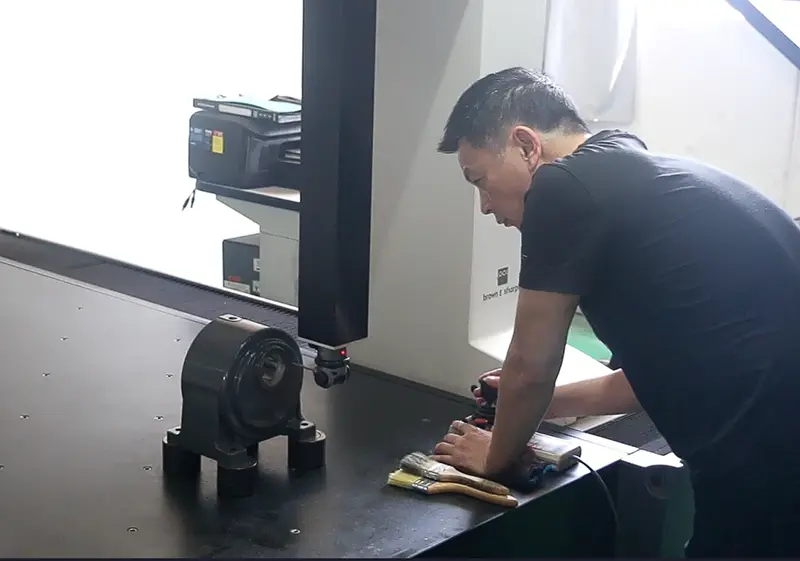
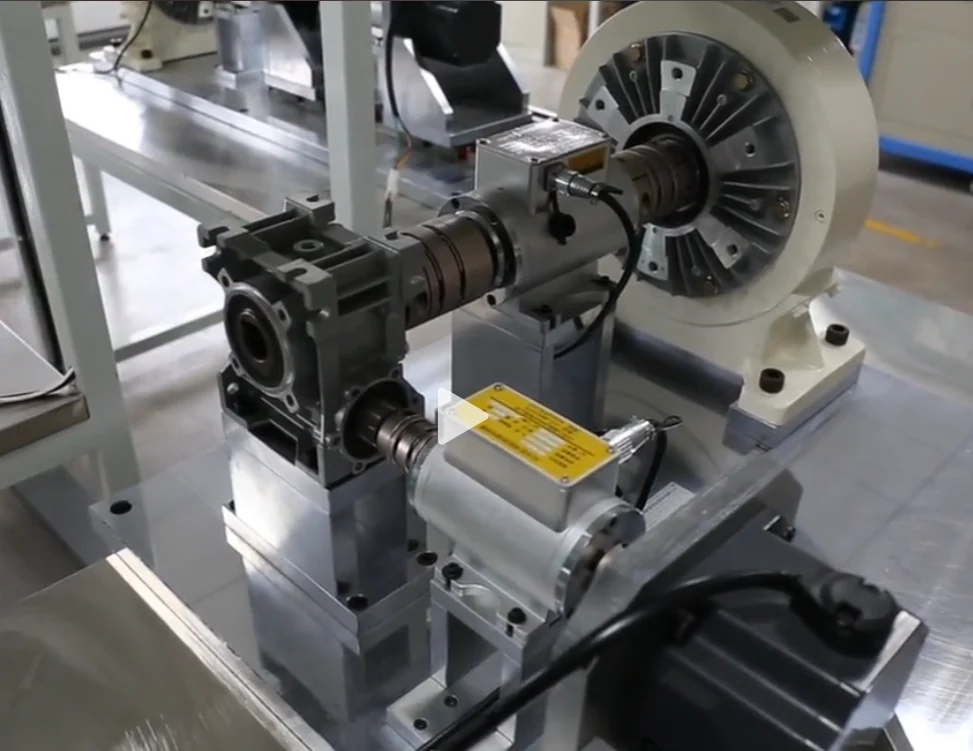
Coordinate-measuring and torque-test photographs show available factory process context, not an order-specific test result. The inspection plan should name the dimensions, runout, fit, rotation, noise or vibration method where relevant, test load, sampling, report format, and witness requirement before release.
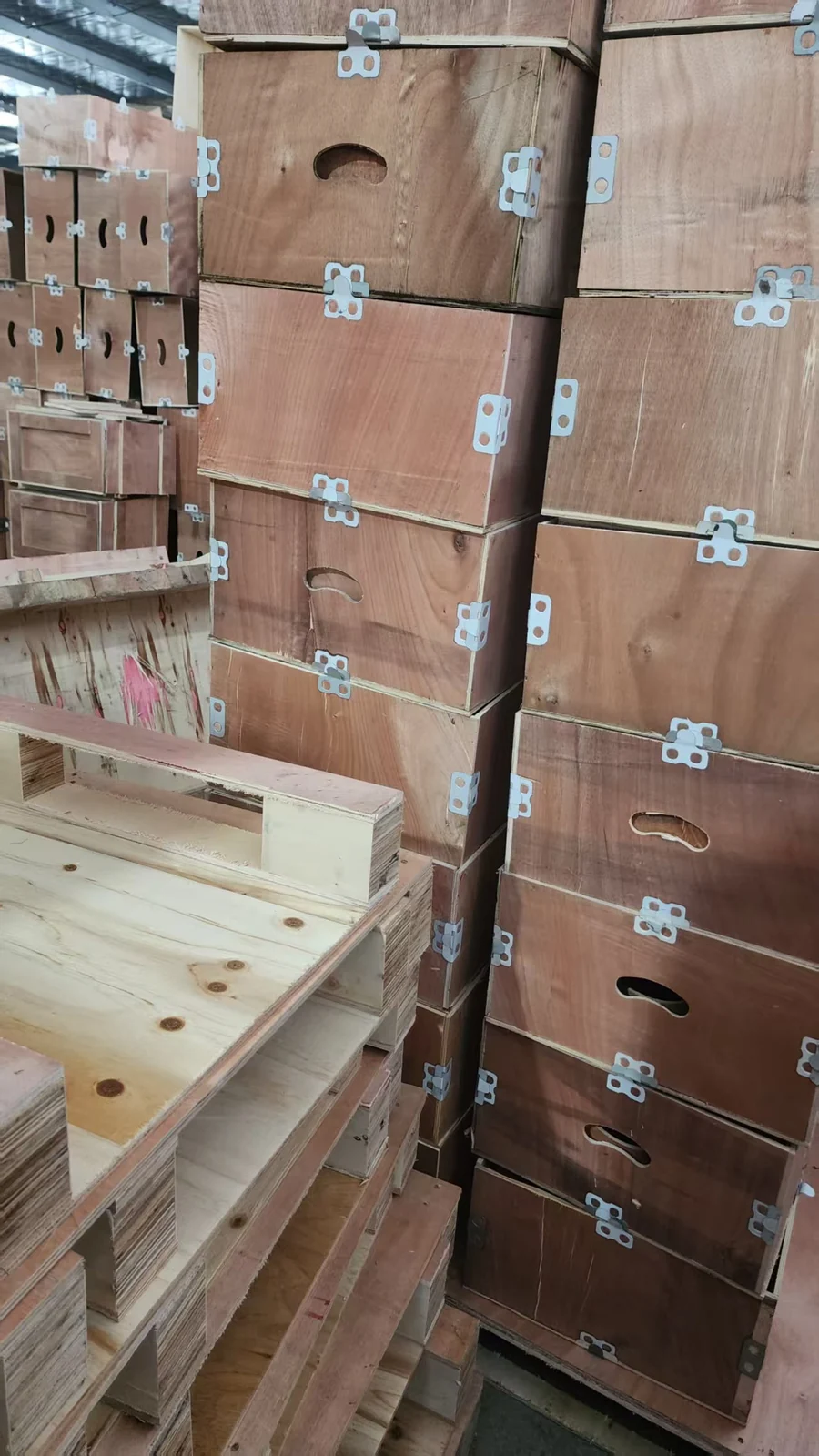
The wooden-crate image is a general packing reference. Final blocking, moisture protection, corrosion prevention, shaft and flange covers, lifting marks, gross mass, center-of-gravity information, lubricant shipping state, and export-pack requirement depend on the released unit, quantity, route, and destination.
Company value is expressed through evidence coordination and order control, not broad unsupported performance claims.
The formal N-series catalog links selection terms, service factors, mounting, cooling, performance, dimensions, and lubricant information.
Input, output, reaction, foundation, lubrication, inspection, and packing boundaries can be reviewed before a custom order is released.
Unconfirmed loads, ratios, interfaces, or test requirements remain visible conditions instead of being converted into unsupported promises.
Open the original PDF and trace every selected value to its exact model, ratio, speed, duty, and mounting condition.
Send a load case and interface package detailed enough to reproduce the selection decision.
Answers remain conditional on the selected motor, controller, reducer, duty and order documents.
Translate the full load spectrum into service factor, mechanical rating, thermal capacity, shaft-load, mounting, lubrication, and interface checks. Then approve the exact catalog row and drawing; a single nominal torque or motor-power value is not sufficient.
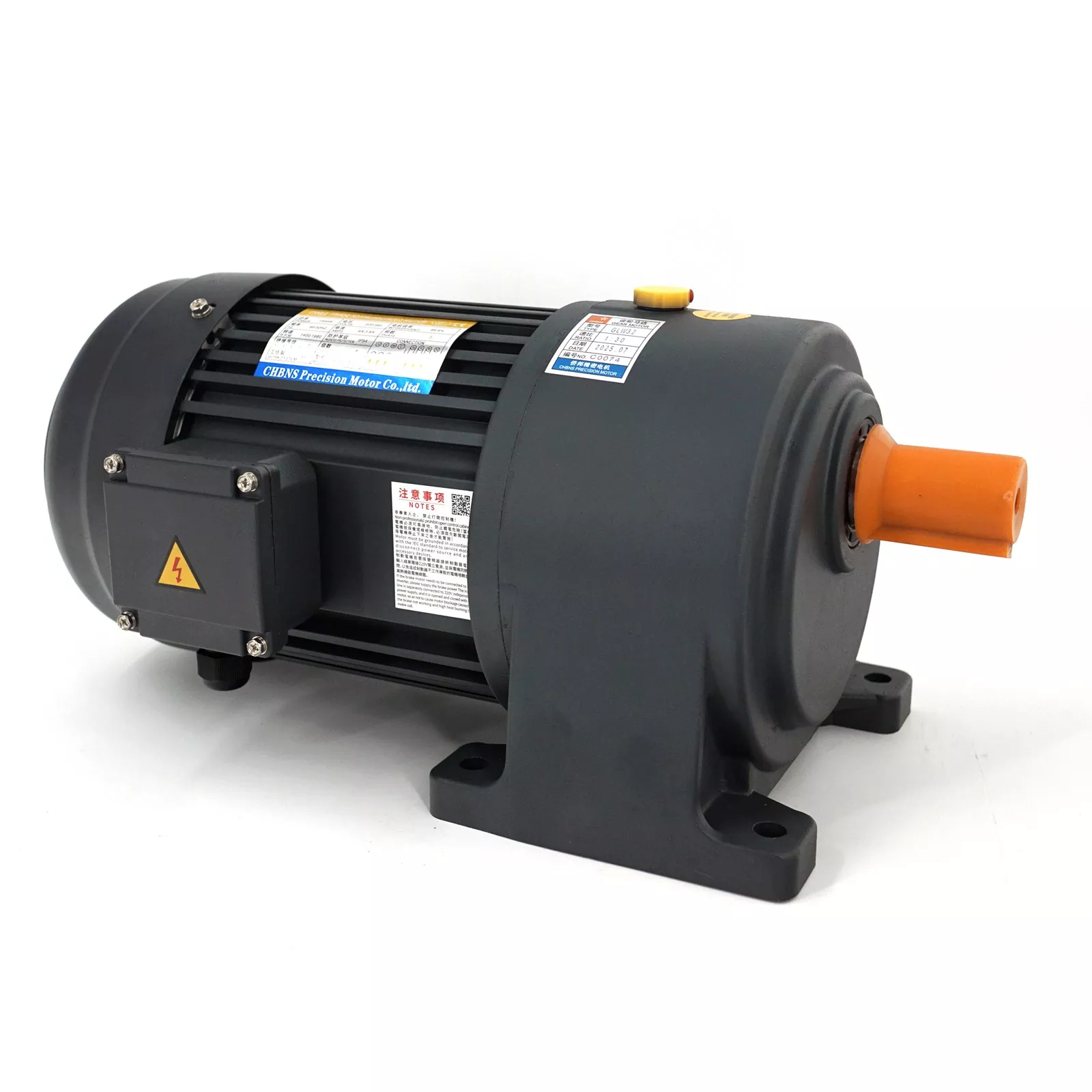
No. It confirms general appearance only. Size, shaft, flange, adapter, dimensions, and mass must come from the approved order code and drawing.
No. Thermal power, running time, ambient, cooling, input speed, external forces, lubrication, starts, shock, and mounting can govern the selection.
Do not assume so. Load holding, braking, overspeed protection, guarding, redundancy, and risk assessment belong to the machine safety design.
Agree the drawing, interfaces, rotation, duty, lubricant state, measurable acceptance items, test conditions, records, and responsibility for the driven-machine trial.
Address
No.785 Jiangnan Road, Nanmingshan street, Liandu district, Lishui City, Zhejiang Province , China.
Tel