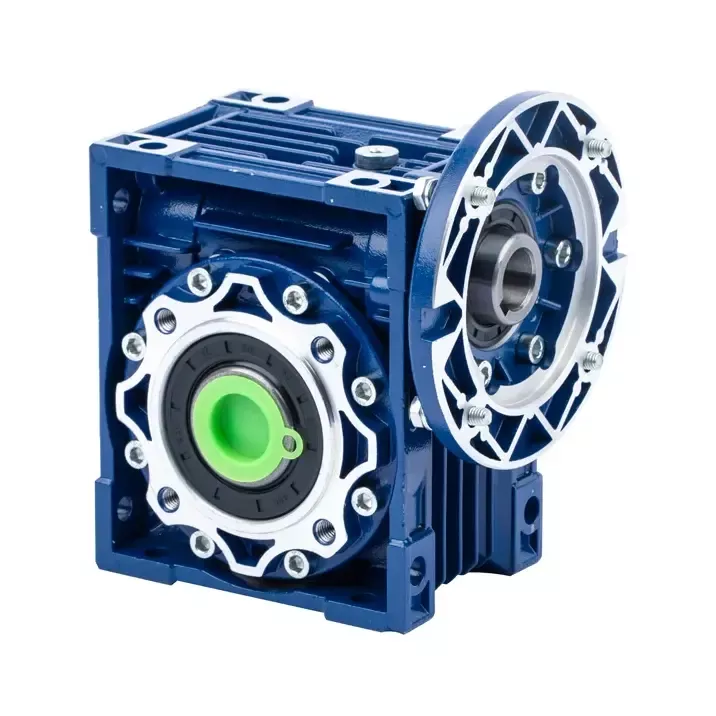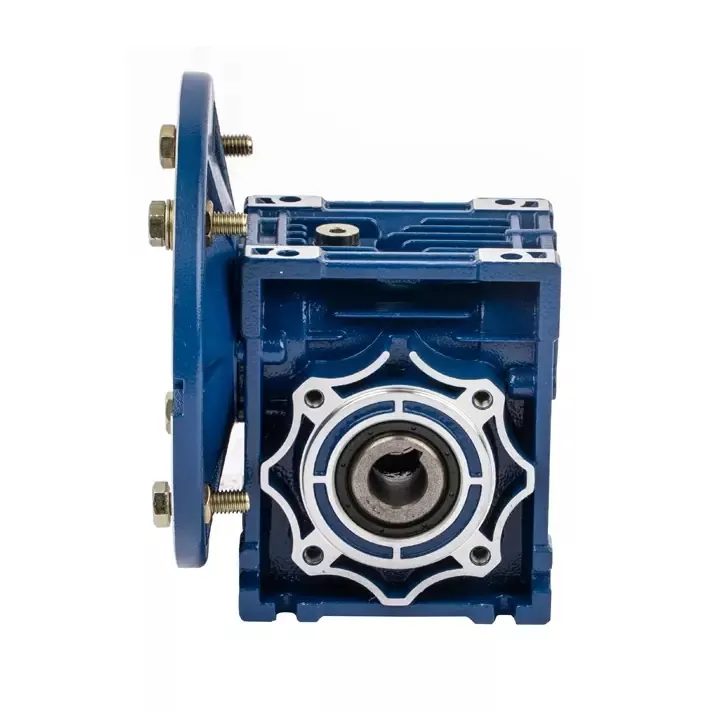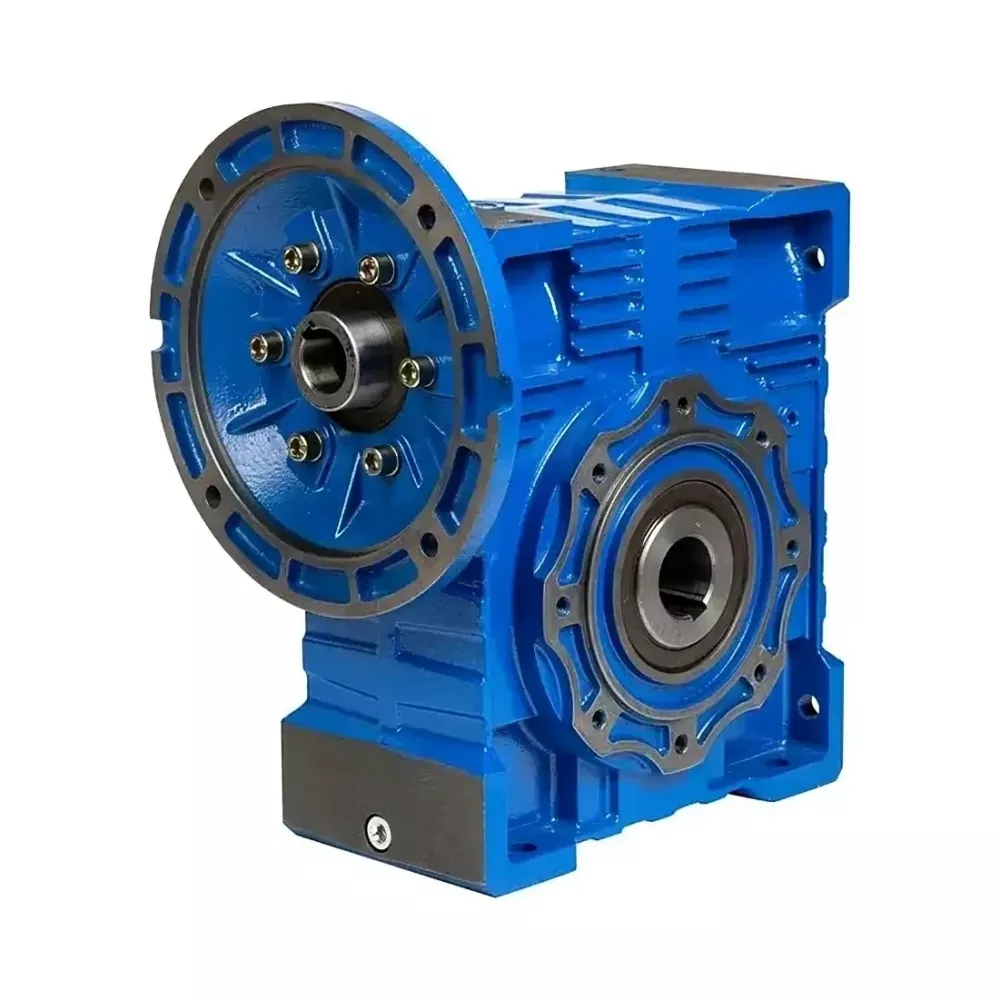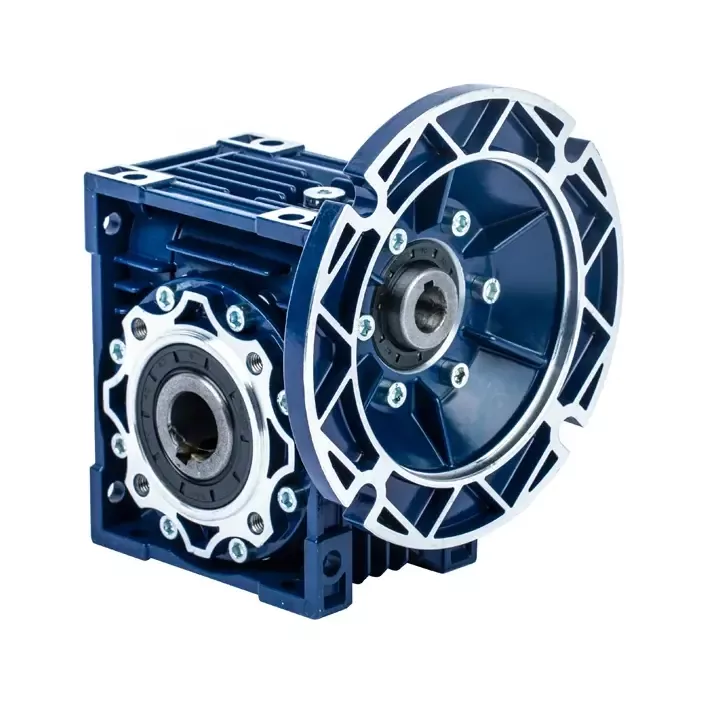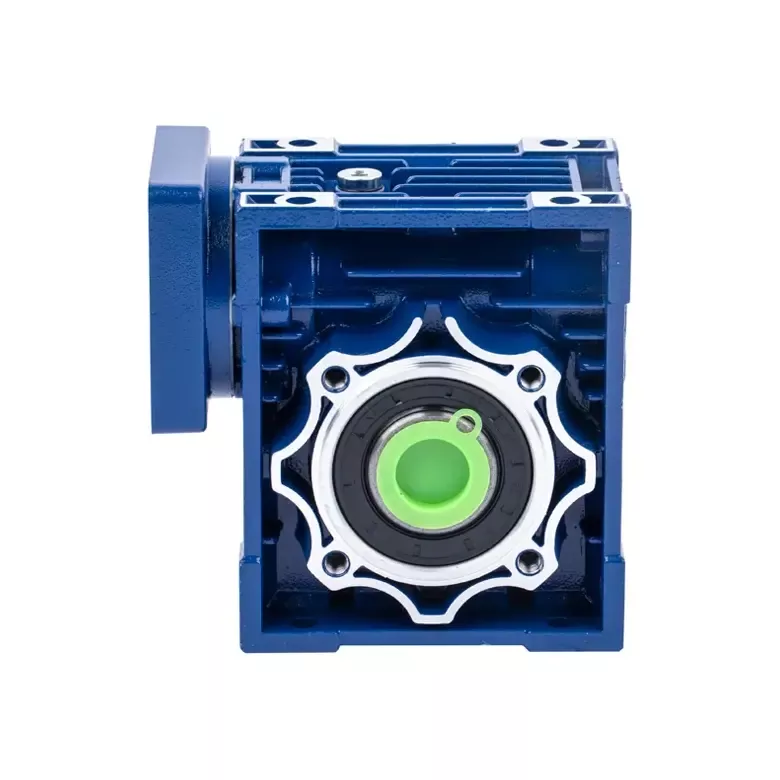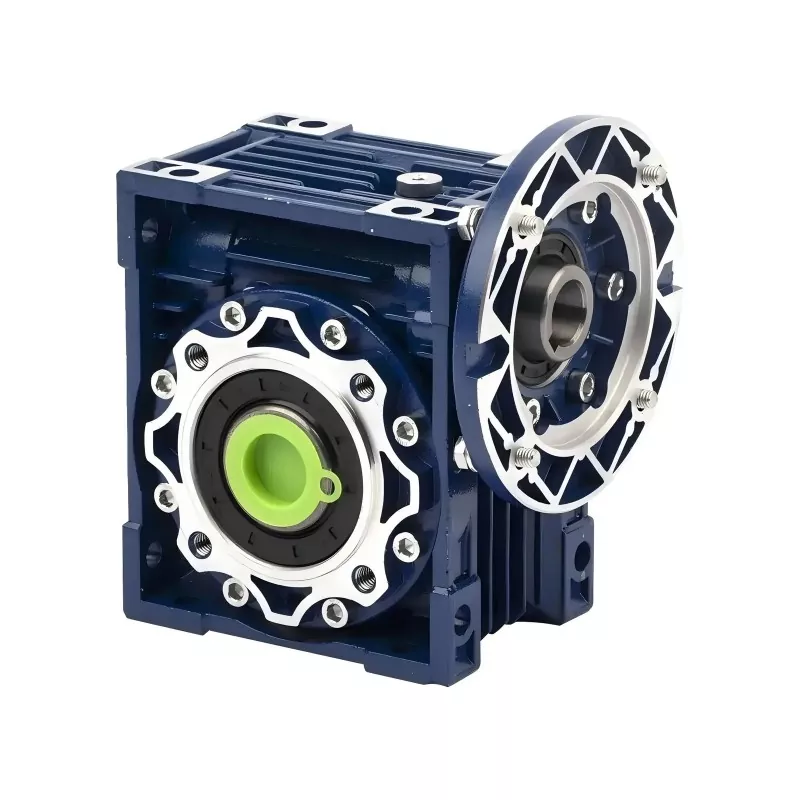
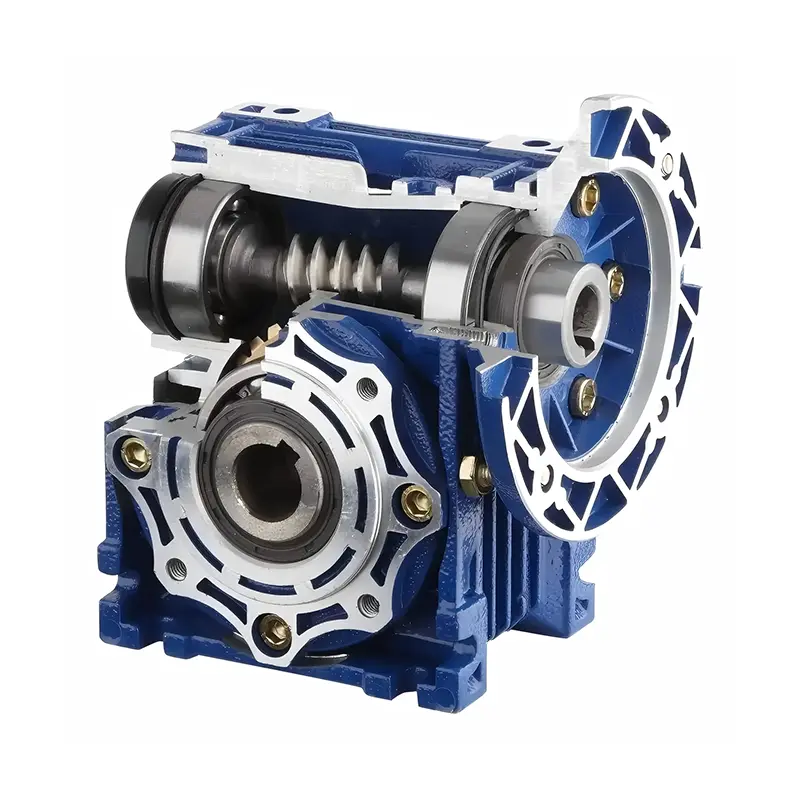
A large speed change is useful only when the operating duty remains supportable. CHBNS reviews the High Ratio Worm Gear Reducer as a China manufacturer and supplier with factory responsibility for the selected NMRV configuration, linking ratio to input speed, load timeline, thermal condition, mounting, lubrication, shaft forces, and the machine's safety controls.
Define minimum, normal, and maximum output speed with torque and duration at each point, then test whether one worm stage fits the mechanical and thermal duty.
The primary advantage is meaningful speed reduction in a compact ninety-degree stage. Real value comes from matching that reduction to load, heat, smoothness, stopping, and safety requirements.
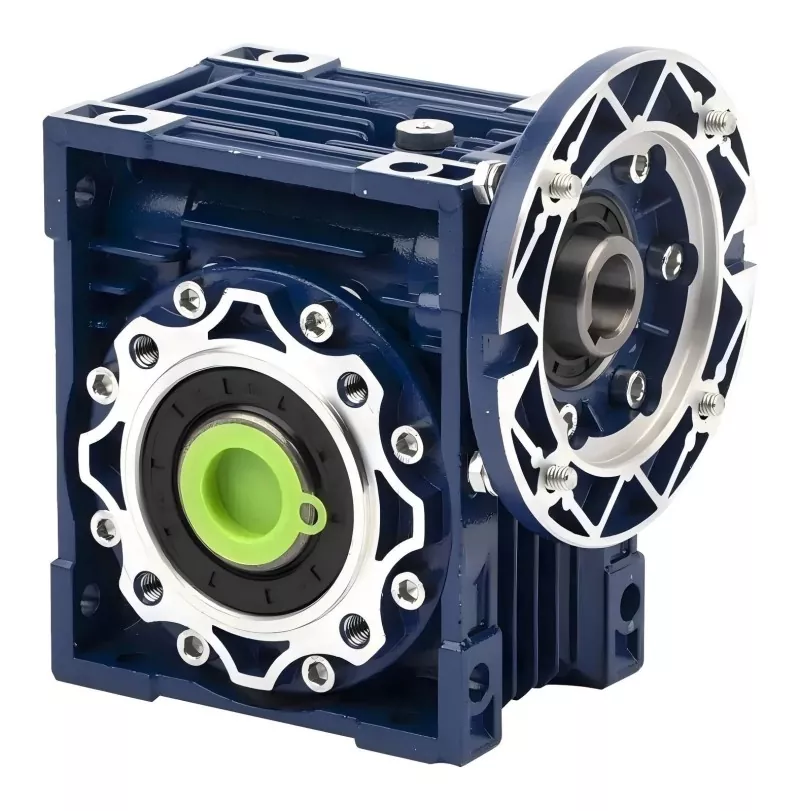
A worm-and-wheel path can create substantial reduction without adding an exposed chain of external pulleys or sprockets, subject to catalog availability and duty.
Perpendicular axes can place the input source beside the driven equipment, helping avoid the long projection of some inline arrangements.
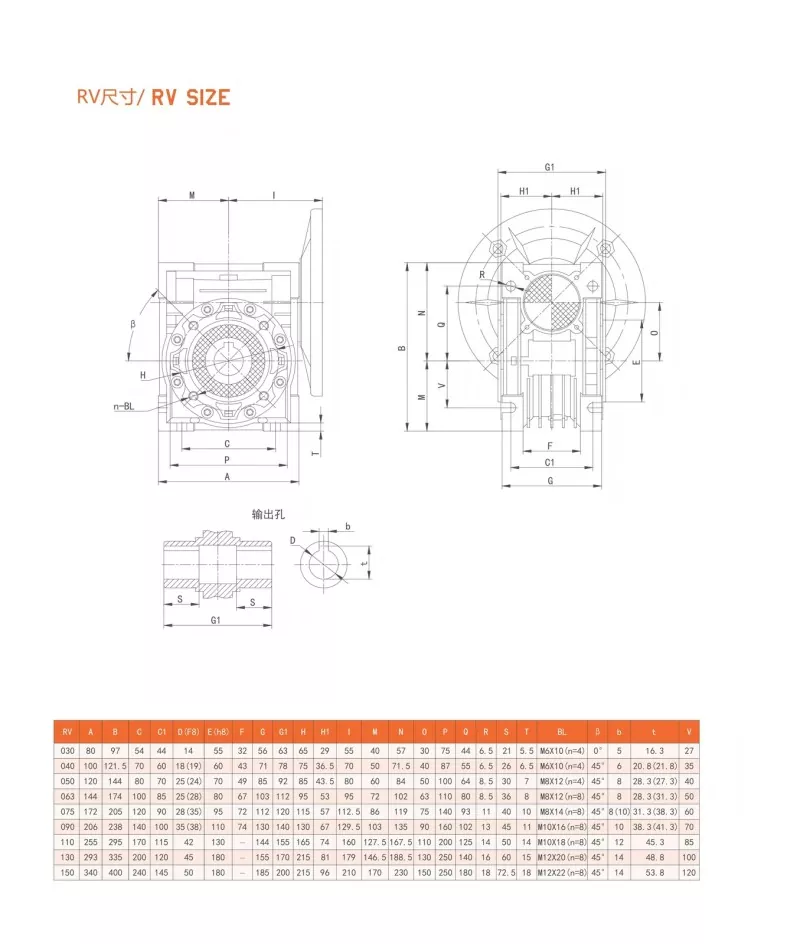
The NMRV catalog includes ratio and size selection data so engineering can work from the relevant row rather than a marketing image or file name.
Creep smoothness, changing load, heat accumulation, stopping, brake sizing, and back-driving can be discussed before the machine is built.
The formal catalog contains multiple size and selection tables. This page deliberately avoids publishing one range as if it applied to every housing, input, and duty.
| Evidence item | Published or visible reference | Interpretation boundary |
|---|---|---|
| Speed relationship | Nominal output speed follows input speed divided by the confirmed ratio | Actual operating acceptance also depends on load, losses, heat, control behavior, and mechanical limits. |
| Published selection material | NMRV catalog pages 42-48 contain family gear-unit selection tables | Use the relevant size and input-condition row; do not merge different tables into a new unsupported range. |
| Size context | RV030, 040, 050, 063, 075, 090, 110, 130, and 150 appear in the dimensional family | A larger or smaller housing is not automatically suitable for a requested ratio and thermal duty. |
| Structure evidence | Cutaway and CAD footage show the worm input and wheel output in a compact housing | The media does not identify a ratio, torque value, efficiency, temperature limit, or self-locking result. |
| Safety boundary | No available image or video demonstrates safety holding | Use a rated brake, mechanical restraint, and complete risk assessment wherever unintended motion matters. |
Final performance follows the confirmed model, controller, ratio, duty and test agreement.
The selected ratio is one coordinate in the decision, not the complete decision.
List input speed and the minimum, normal, maximum, setup, and creep output speeds, including how long the machine remains at each point.
Add continuous torque, startup demand, inertia, acceleration, reversal, shock, jams, and stopping requirements instead of applying one load to every speed.
Review input speed, runtime, ambient, enclosure, air movement, mounting attitude, lubricant requirements, and nearby heat before accepting the ratio.
Use the relevant catalog row, order drawing, brake or restraint plan, overload protection, inspection criteria, and quotation conditions to release the configuration.
The comparison concerns procurement evidence. A ratio-only external quote can leave the combined drawing, interface tolerances, engineering responsibility, and approved document revision unresolved while focusing attention on one listed ratio.
Lower-feature external optionOne target RPM is divided into input speed and converted directly to a ratio request.
CHBNS review pathMinimum, normal, maximum, setup, and creep speeds are paired with load and duration.
Lower-feature external optionNominal mechanical rating can be considered without runtime, starts, enclosure, ambient, or heat release.
CHBNS review pathThermal conditions are reviewed with the selected table row before quotation release.
Lower-feature external optionA large ratio may be assumed to prevent reverse motion under all conditions.
CHBNS review pathBack-driving is treated as conditional and safety holding is assigned to rated safeguards.
Lower-feature external optionA single-point approach can suit a proven repeat duty with controlled input, load, environment, and prior acceptance history.
CHBNS review pathVariable, new, slow-creep, reversing, or safety-relevant duties need the fuller operating map.
Each application must be screened against thermal duty, output smoothness, brake requirements, and the selected catalog data.
Low output speed can support controlled delivery when material surges, starts, jams, and required smoothness are measured.
Define the loaded start and daily runtime; low nominal speed does not by itself mean low thermal demand.
Use when travel time and load are known, with separate limit, overload, braking, and safe-state design where required.
Check inertia, acceleration, coast, backlash, dwell, shock, and holding rather than assuming the ratio provides positioning accuracy.
The gear-inspection photograph is factory context and does not certify this order. Agree identity, ratio verification method, rotation, key interface dimensions, accessories, visible condition, running observations, documentation, sampling, and acceptance records for the confirmed configuration.
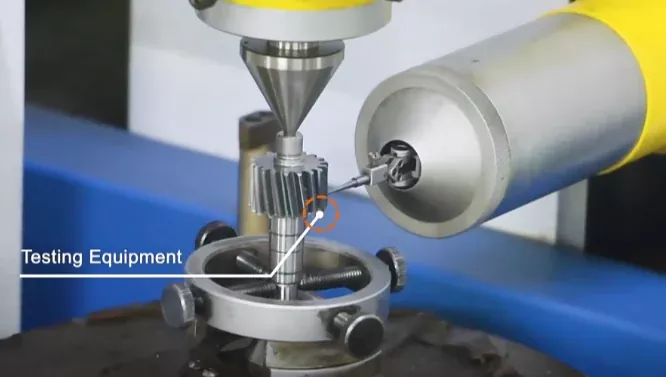
Keep size, input condition, ratio, rating, mounting, and accessories attached to the exact catalog row.
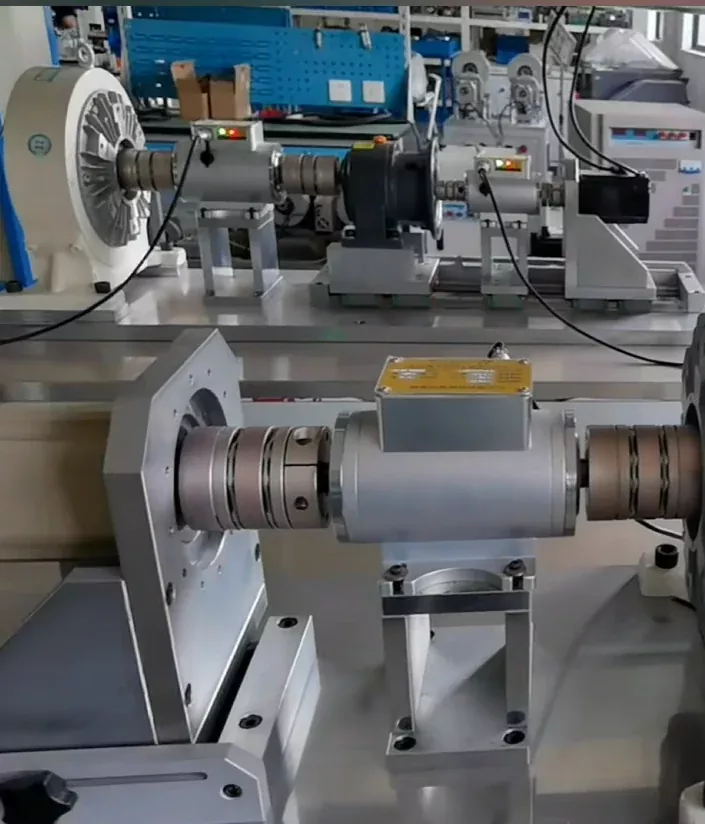
The CAD video visualizes housing and internal assembly. It contains no operating-speed measurement, torque load, temperature record, brake test, or complete motor, so it cannot validate a ratio or duty by itself.
Protect machined openings and flanges, immobilize shafts and loose parts as required, and make the product identity readable without opening every package. Packing follows mass, quantity, humidity, stacking, route, destination, and handling instructions.
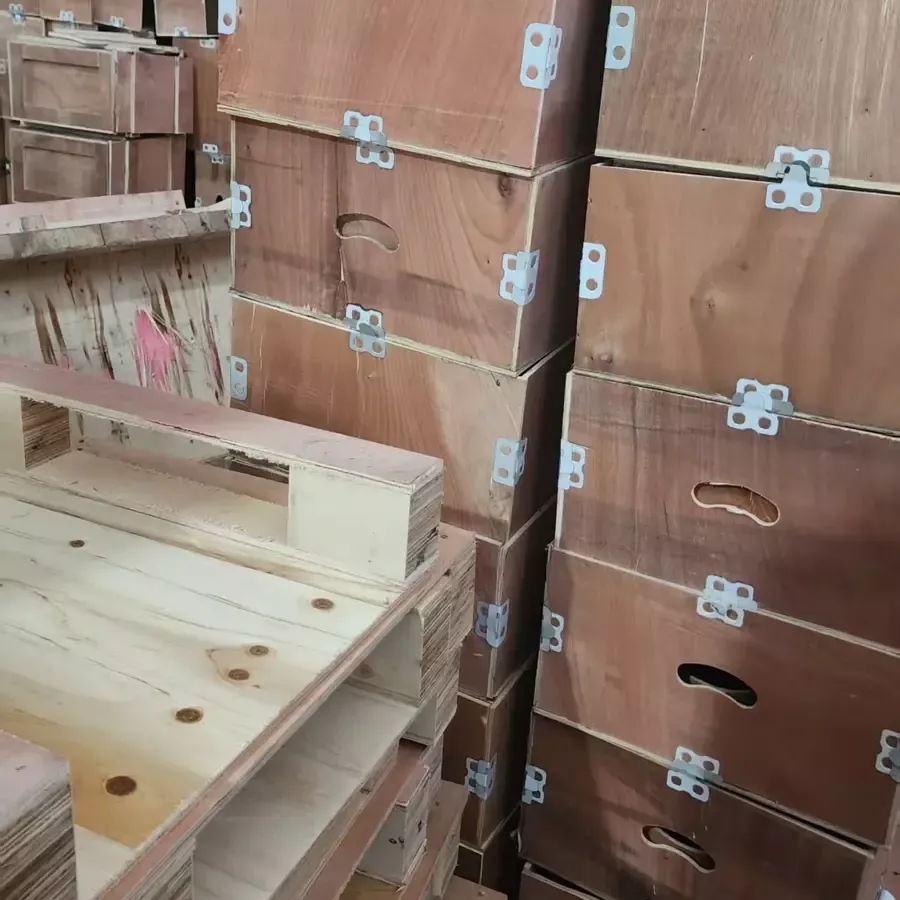
A credible low-speed result is a system decision supported by the correct table row.
The quotation can keep speed, load, runtime, heat, mounting, and stopping questions attached to the ratio choice.
The original catalog accompanies the page so the buyer can inspect the applicable family evidence.
The factory does not convert AI marketing material or image file names into verified performance claims.
Engineering can only distinguish nominal speed reduction from a usable operating point when every speed includes load, duration, dynamics, environment, and stopping needs.
Ratio answers a kinematic question; duty and safety require additional evidence.
Use the applicable catalog table with input speed, the complete output speed-load-duration map, mounting and ambient conditions, and mechanical interfaces. Evaluate braking and holding separately; never infer a safety function from ratio or worm geometry alone.
No. Check usable output speed, smoothness, load, thermal duty, starts, efficiency, mounting, and alternative architectures for the real process.
No. Use the nameplate, selected code, formal table, drawing, and agreed verification method.
Not as a safety assumption. Geometry, lubrication, wear, vibration, and load affect behavior; use a rated brake or mechanical restraint where motion must be prevented.
Heat accumulation and available cooling depend on how long the system remains at each load and speed, not merely the maximum value.
Address
No.785 Jiangnan Road, Nanmingshan street, Liandu district, Lishui City, Zhejiang Province , China.
Tel