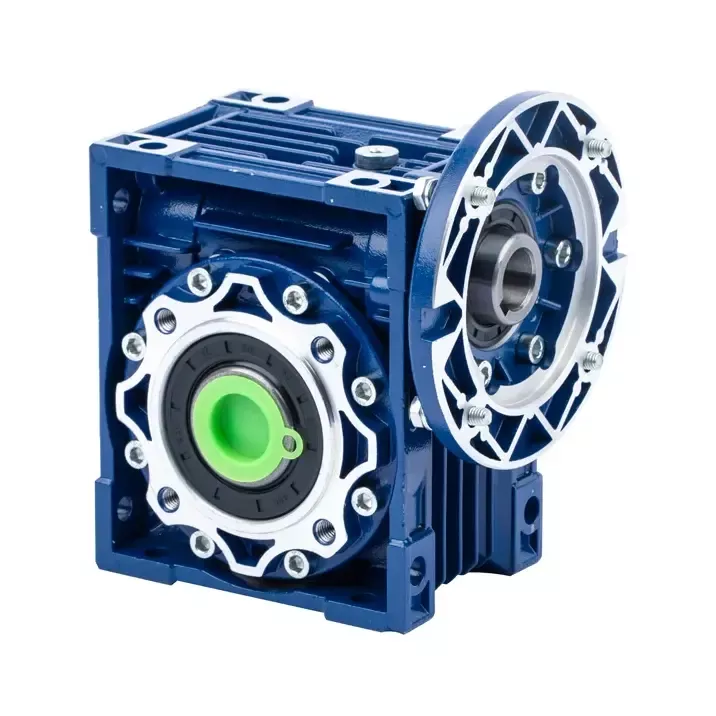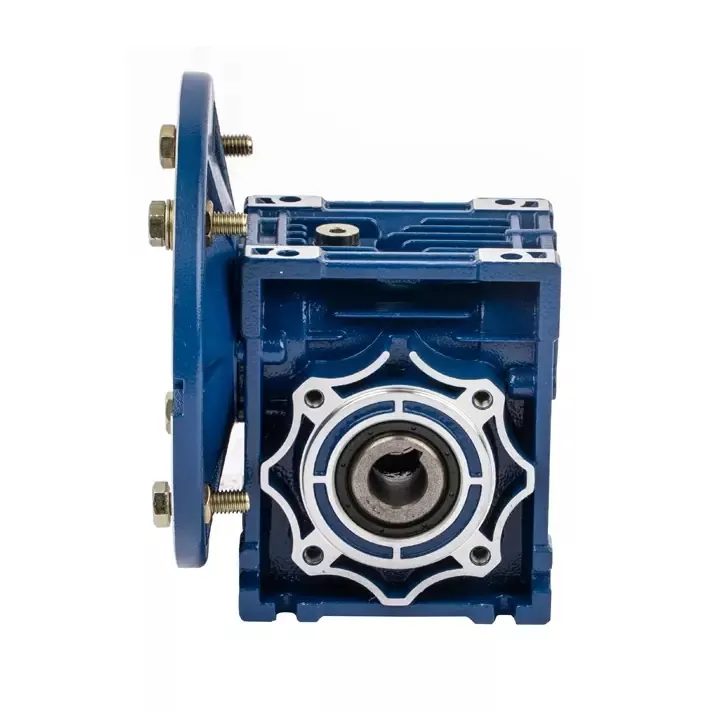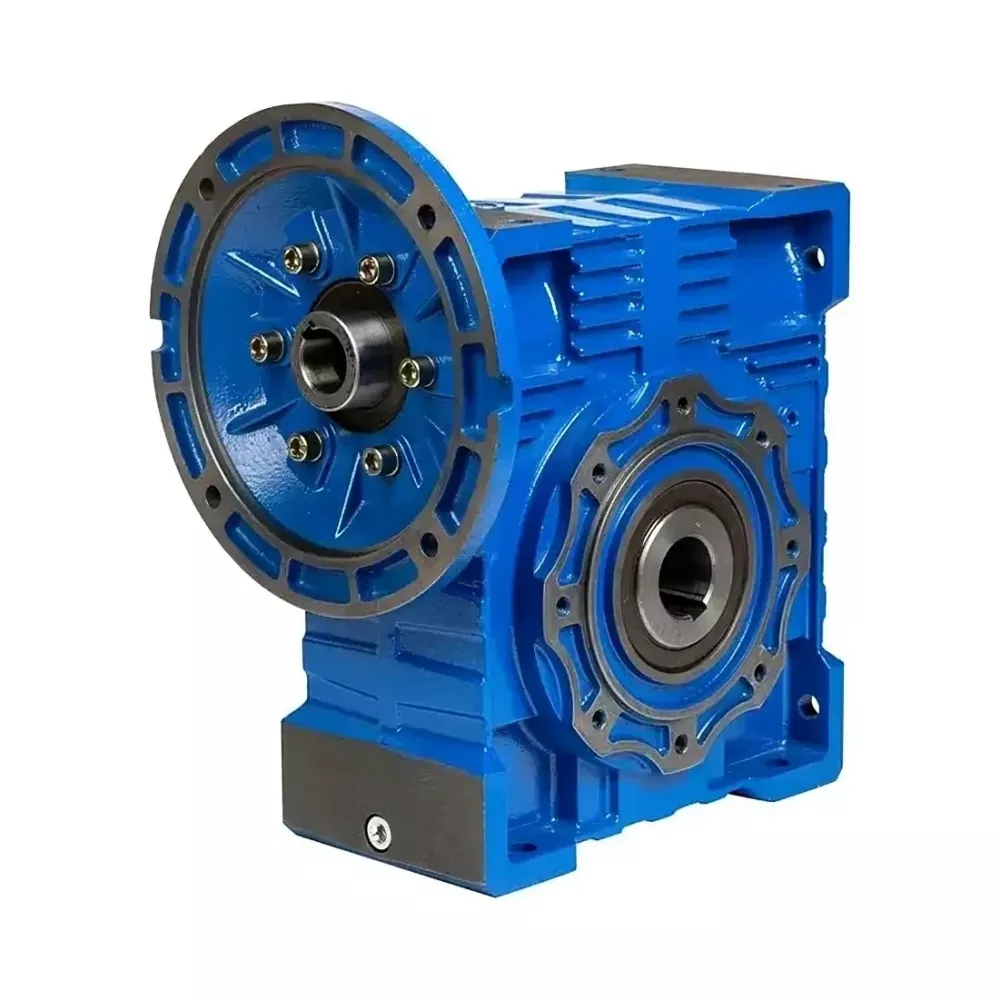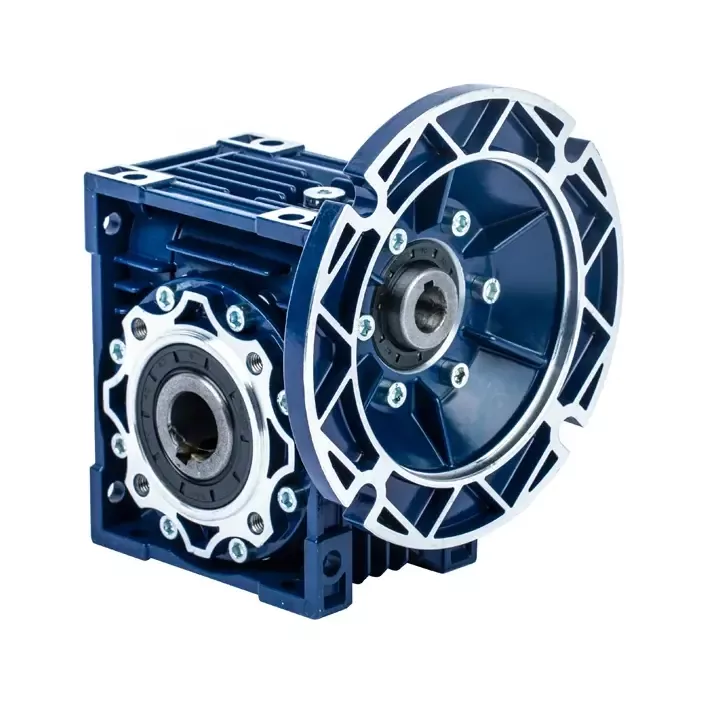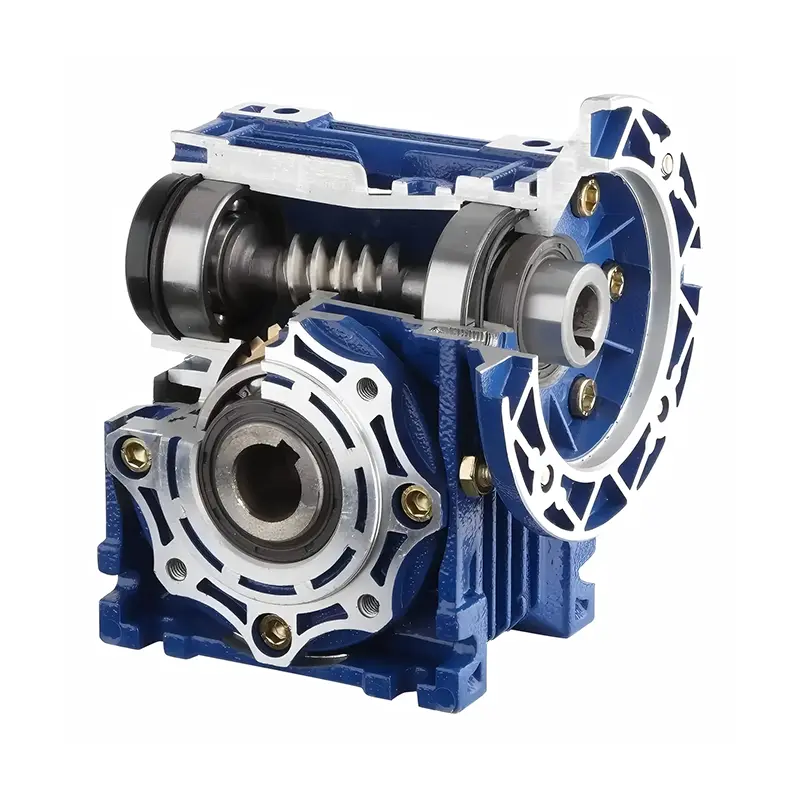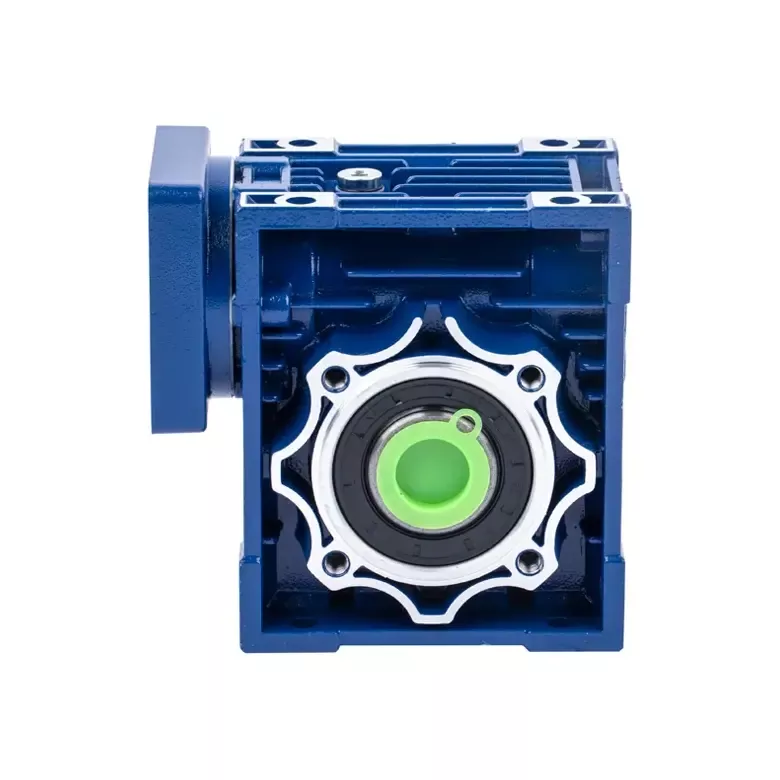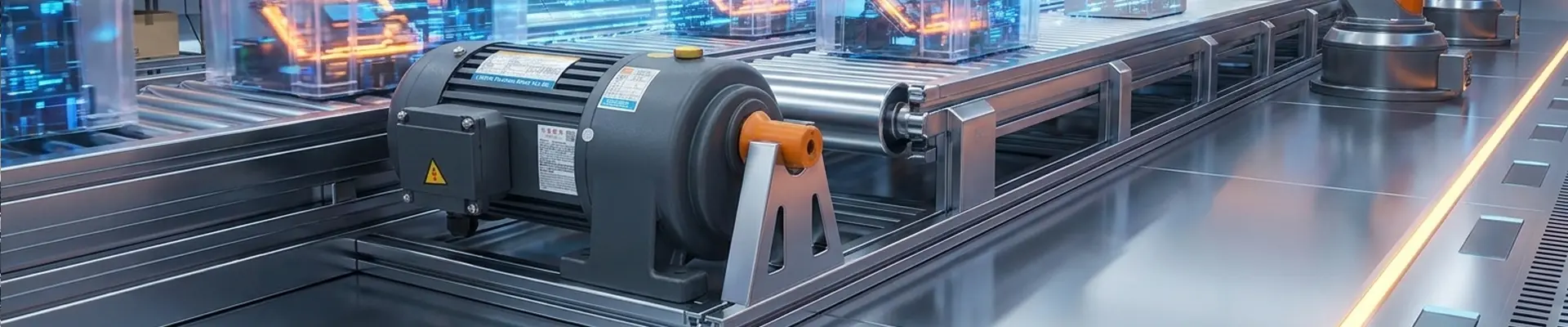
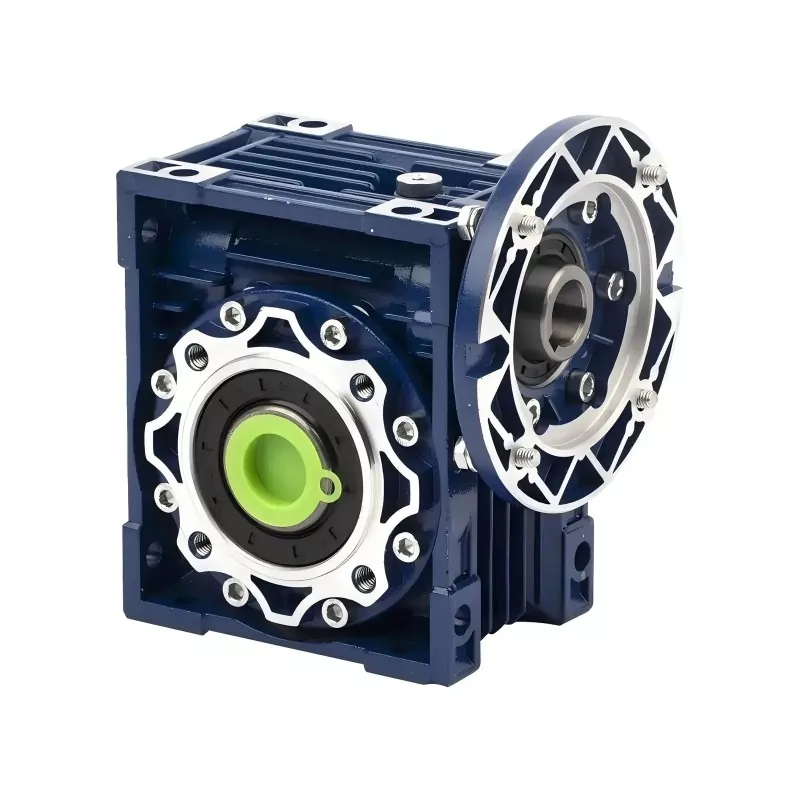
When a machine builder retains the motor or another input source, the Compact Worm Gear Reducer is reviewed by CHBNS as a reducer-only component. As a China-based manufacturer, supplier, and factory, CHBNS connects the compact NMRV housing to the final ratio, thermal capacity, bore, flange, mounting attitude, lubrication, and shaft-load requirements instead of treating the outline as a complete selection.
Confirm who supplies and supports the motor, adapter, coupling, controls, alignment, and guarding; then check whether a compact NMRV stage reduces complexity for the machine builder.
This architecture is most valuable when the buyer needs a compact right-angle reduction stage but already owns an input standard. Selection freedom must be balanced with explicit adapter and alignment responsibility.
An OEM can retain a preferred motor, servo, stepper, hydraulic, or mechanical input concept when the interface and operating limits are proven compatible.
Perpendicular input and output axes can fit equipment where an inline reducer would interfere with adjacent tooling, panels, or access doors.
The visible hollow bore creates a documented starting point for direct mounting, while fit, key, retention, shaft support, and reaction still require drawings.
Catalog drawings for sizes, mounting arrangements, input accessories, output flanges, and shafts allow conflicts to surface before detailed fabrication.
A small housing does not remove the need to define the complete mechanical loop.
Record motor or drive type, speed, shaft, pilot, flange, coupling, support, alignment method, and who owns the adapter design.
Separate continuous torque, startup demand, acceleration peaks, reversals, shock, and jam exposure instead of quoting one nominal load.
Check the actual orientation, ventilation, nearby heat sources, duty hours, lubricant requirements, external loads, and access to plugs and fasteners.
Approve the selected family size, ratio, input and output details, drawing revision, inspection scope, accessories, and packing before production.
The available files are strong on physical architecture and family selection, but they do not replace a confirmed motor-adapter design or duty calculation.
| Evidence item | Published or visible reference | Interpretation boundary |
|---|---|---|
| Reducer identity | Blue NMRV housing, perpendicular input flange, hollow output, and mounting faces are visible | Appearance confirms product form, not a specific ratio, rating, material, or lubricant fill. |
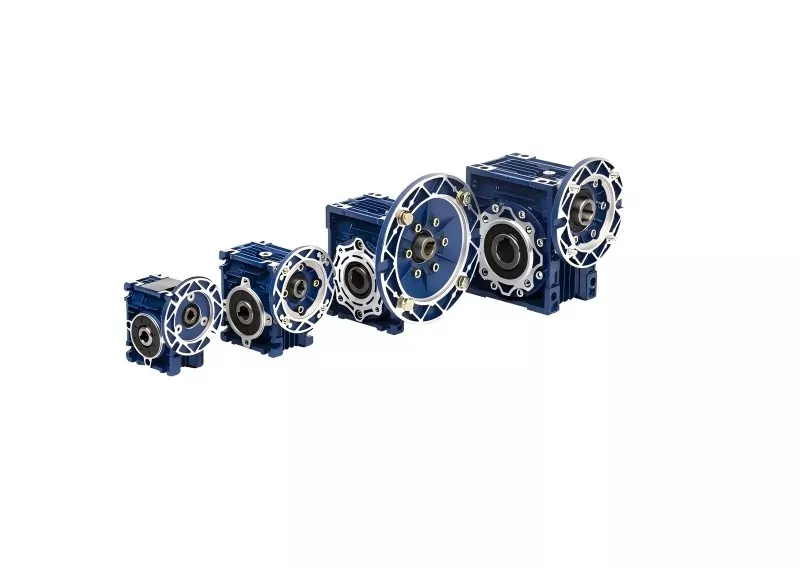
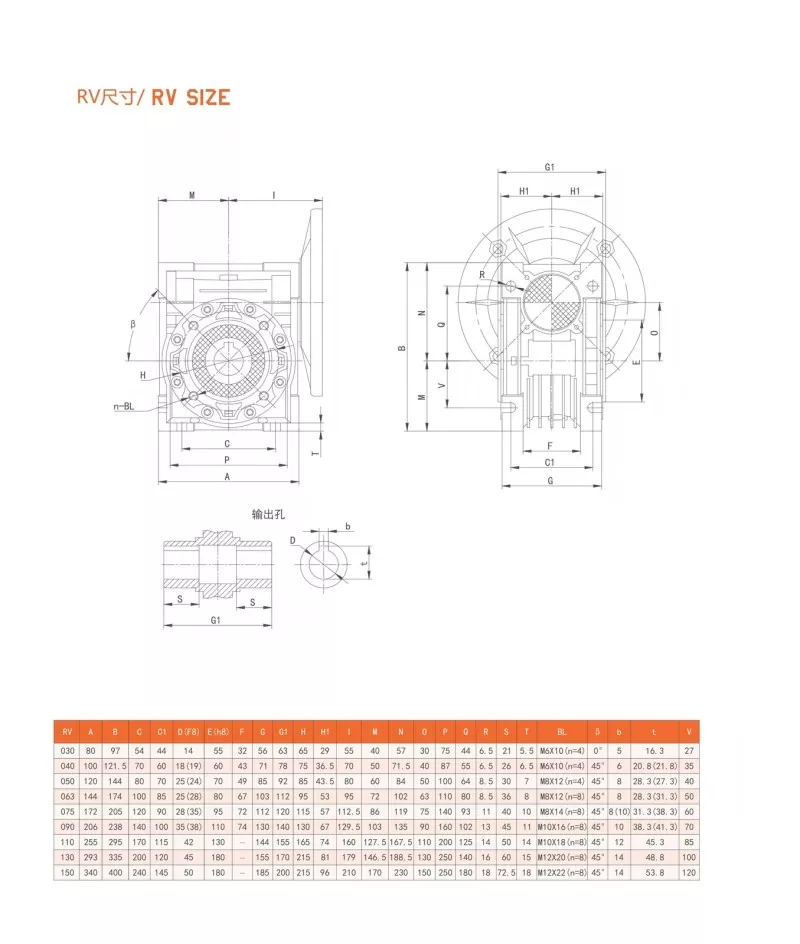
| Dimensional family | Formal size page lists RV030 through RV150 families | Use the exact row and order drawing for the chosen size; do not scale dimensions from a photograph. |
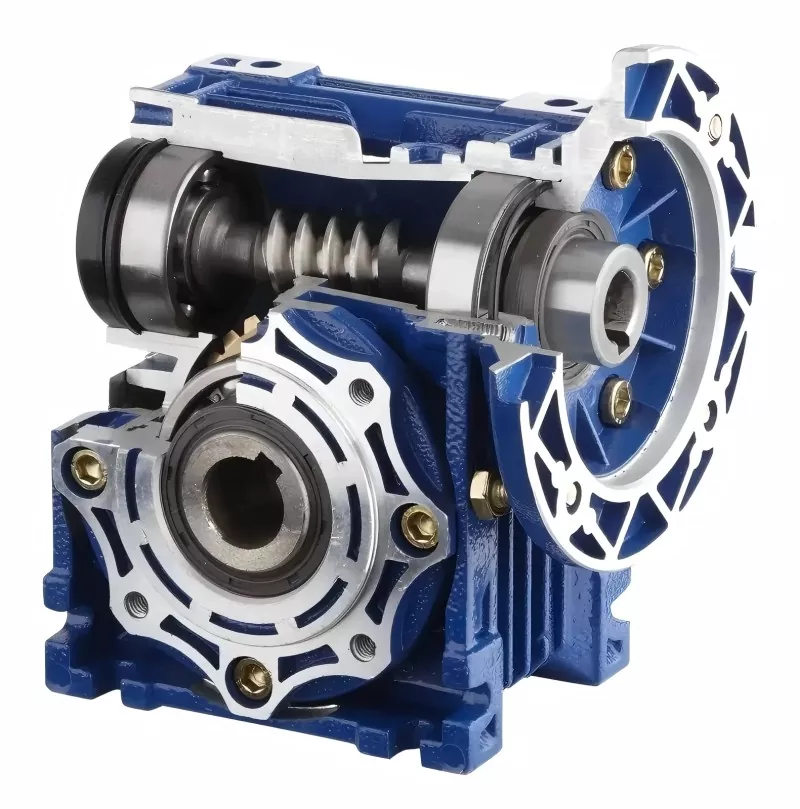
| Internal path | Cutaway and CAD assembly show the worm input driving the wheel on a perpendicular output axis | The media explains arrangement only; contact geometry, material, efficiency, and life need model evidence. |
| Accessory coverage | Catalog pages show input and output accessory series | Accessory compatibility and supply scope must be confirmed against the selected reducer code. |
| Selection tables | Family tables organize size and operating choices | The page does not transcribe an unsupported universal ratio or torque range; engineering must use the relevant row. |
Final performance follows the confirmed model, controller, ratio, duty and test agreement.
This compares evidence levels in the buying process. An outline-led external purchase may omit the combined installation drawing, fit tolerances, allocation of interface responsibility, and the revision used for approval.
Lower-feature external optionA bore or flange may look compatible while pilot, shaft length, support, and speed limits remain unknown.
CHBNS review pathInput source and adapter details are listed as explicit review items before release.
Lower-feature external optionA photograph can hide bore tolerance, key geometry, axial retention, and reaction needs.
CHBNS review pathThe inquiry requests a machine-shaft drawing and connects it to the selected family data.
Lower-feature external optionRatio and nominal torque may be copied without runtime, starts, ambient, or heat-release conditions.
CHBNS review pathOperating timeline and installation environment are reviewed before selecting a table row.
Lower-feature external optionOutline-led replacement can work when the machine owner already has verified drawings, duty history, and acceptance tests.
CHBNS review pathThe documented review path is stronger when those records are missing or the application is changing.
These examples assume the buyer controls the input source and accepts responsibility for the complete machine integration.
Use when the existing motor and control remain serviceable, provided the new adapter, input speed, torque, direction, and duty are verified.
A shared motor or servo specification can feed different reducer selections when each flange, shaft, inertia, and operating limit is checked.
Reducer-only supply may accept another input concept, but speed, shock, support, guarding, and safe holding must still be engineered.
The right-angle layout can avoid an inline obstruction after the full motor or drive projection and removal path are included.
The heat-treatment image shows a general manufacturing context, not proof for a particular gear set. For the order, define identity, key dimensions, rotation, visible condition, agreed running observations, accessory completeness, sampling, and report format against an approved drawing.

Cap the input opening and hollow output, shield machined flange faces, immobilize keys and plugs, and keep accessory identification with the unit. Packing type follows mass, quantity, route, humidity exposure, stacking, and handling instructions rather than one universal method.
Catalog evidence narrows the choice; only the confirmed configuration can release fabrication.
The local NMRV video shows CAD assembly of the housing and internal reducer components. It supports architecture review and does not certify ratio, torque, efficiency, self-locking, material, or ordered-unit quality.
The useful distinction is accurate scope and traceable interface review.
The inquiry can focus on mechanical interfaces without pretending that a motor is included.
Family screening data and final order dimensions are kept as distinct evidence levels.
A China factory can review new-build or replacement interfaces, while the buyer retains final machine responsibility.
Provide both the existing machine evidence and the new duty. A matching outline alone does not establish a drop-in replacement.
The reducer cannot close motor, coupling, guarding, or control responsibilities by itself.
Choose reducer-only supply when the equipment builder has a defined, compatible input source and wants to retain that standard. Confirm the adapter, support, alignment, speed, torque, duty, controls, and guarding as part of the complete machine.
Possibly, if its flange, pilot, shaft, speed, torque, supply, duty, and support are compatible with the selected reducer and adapter.
No. A smaller frame may lack the required mechanical or thermal capacity, and the complete input projection may govern the real envelope.
Do not assume it. Holding and back-driving depend on configuration and condition; provide a rated brake or restraint wherever unintended motion creates risk.
Confirmed dimensions, tolerances, ratio, input and output interfaces, ratings, duty, lubricant and mounting requirements, accessories, and an approved drawing revision.
Address
No.785 Jiangnan Road, Nanmingshan street, Liandu district, Lishui City, Zhejiang Province , China.
Tel