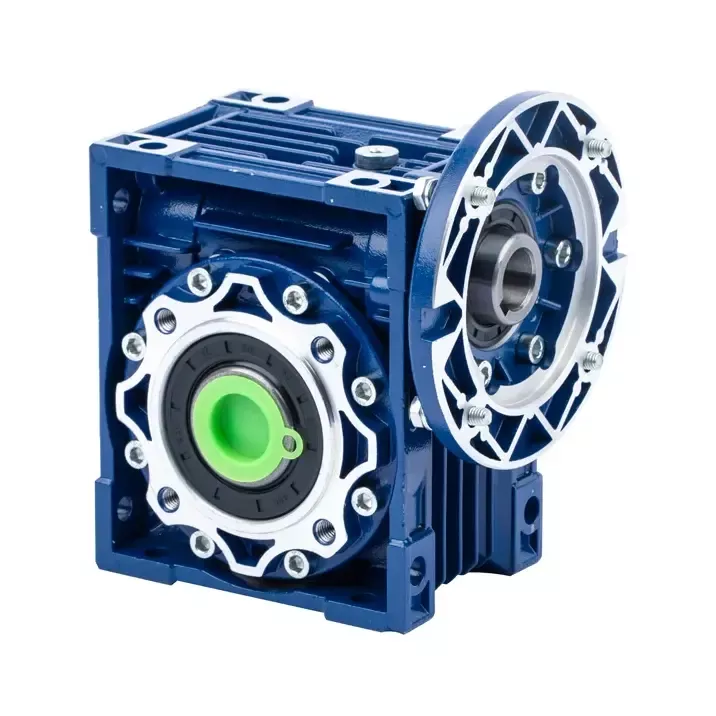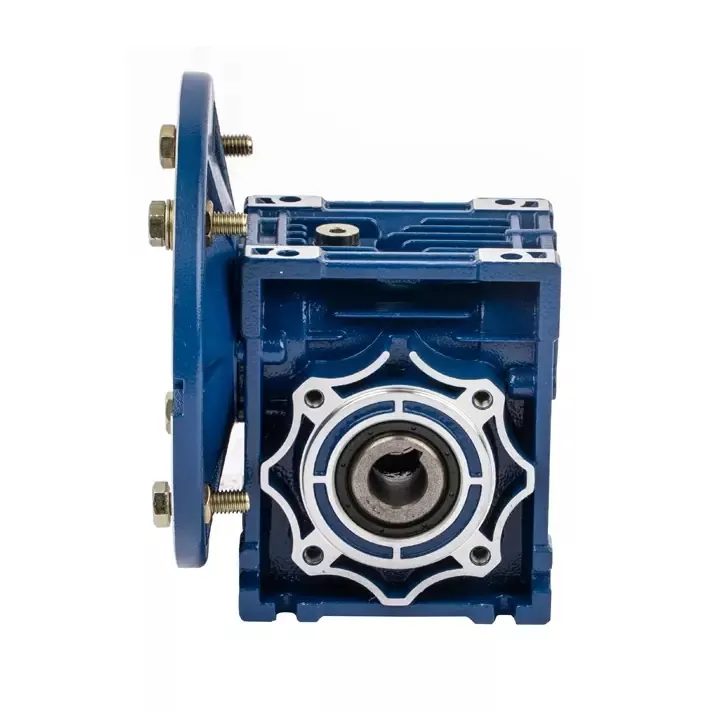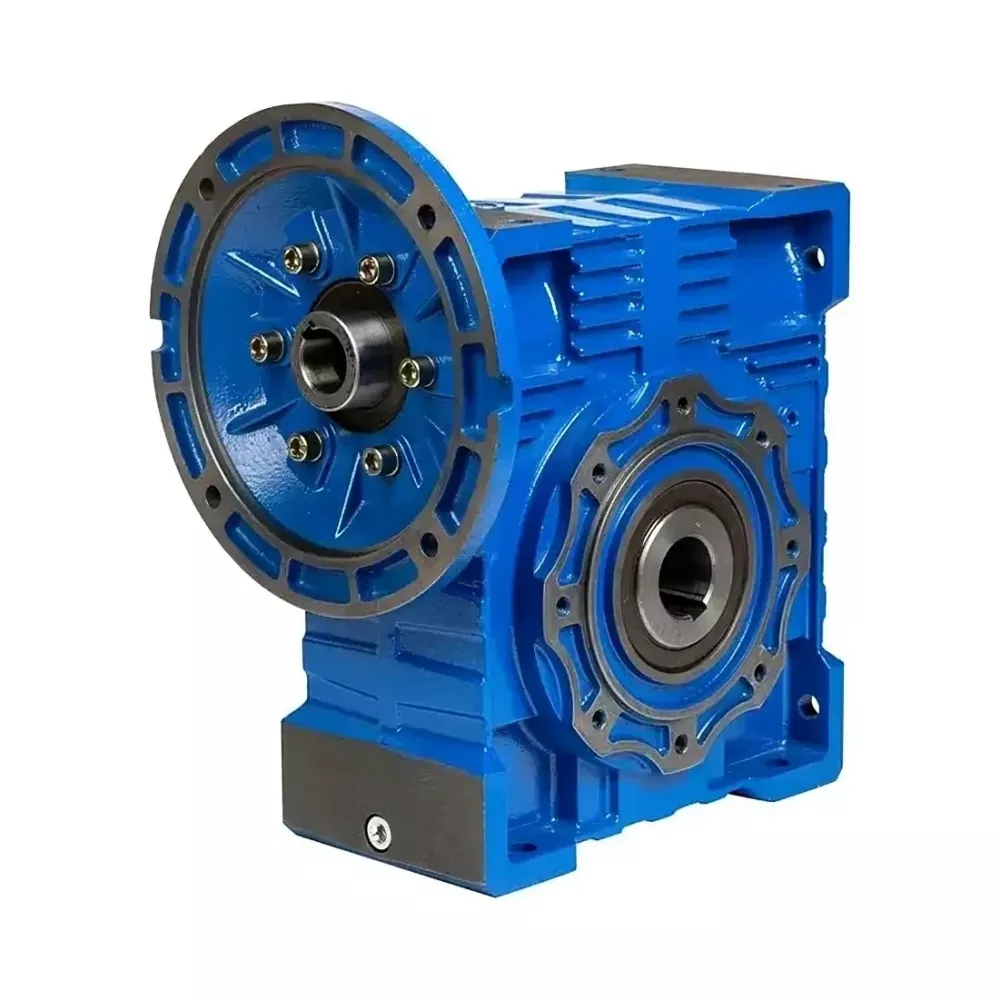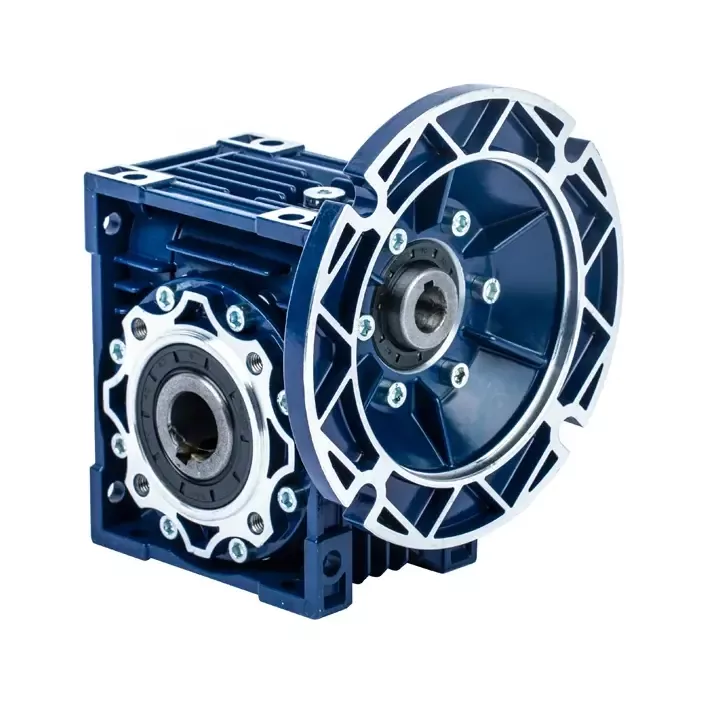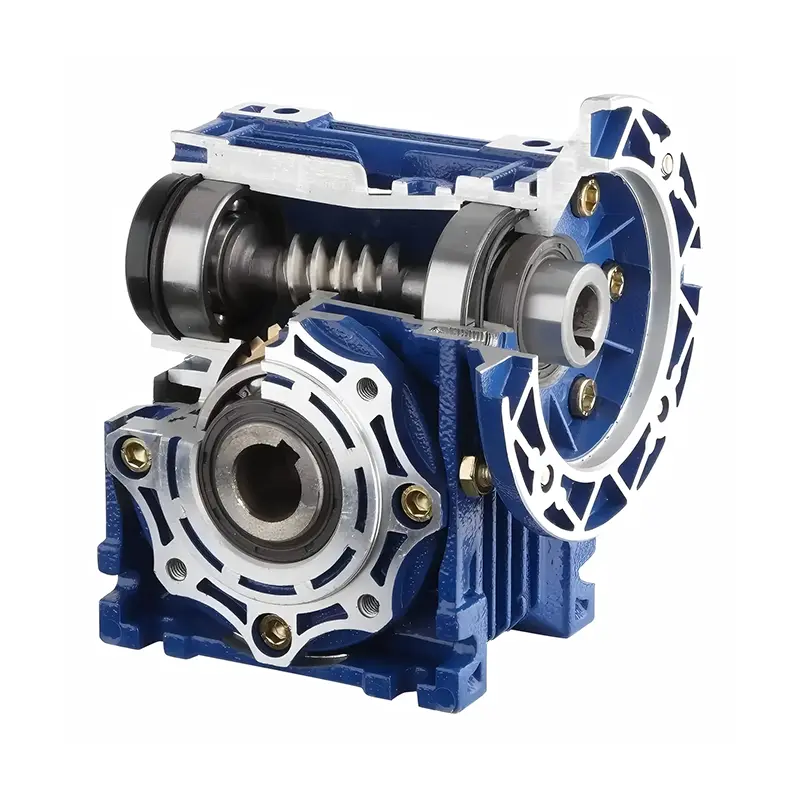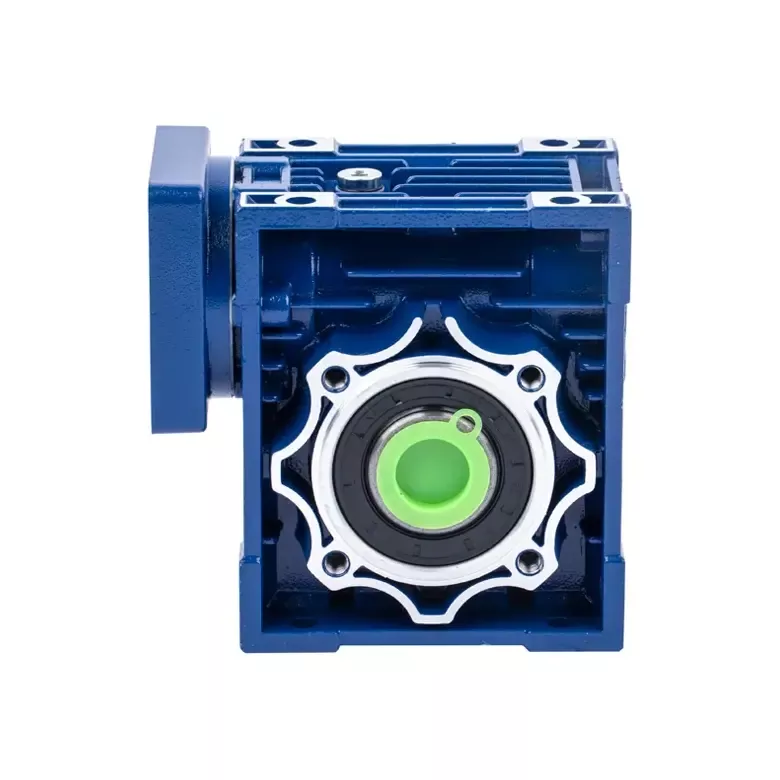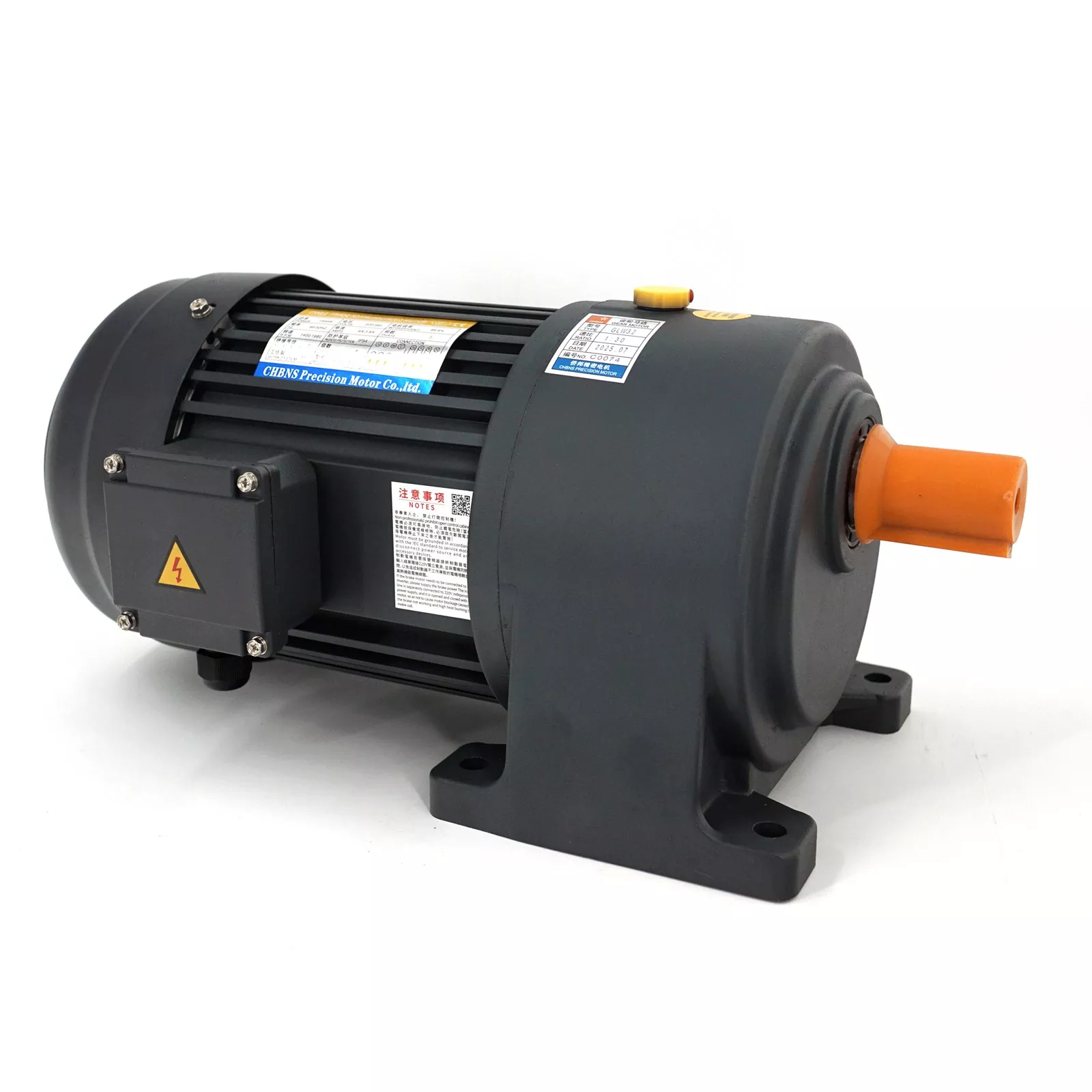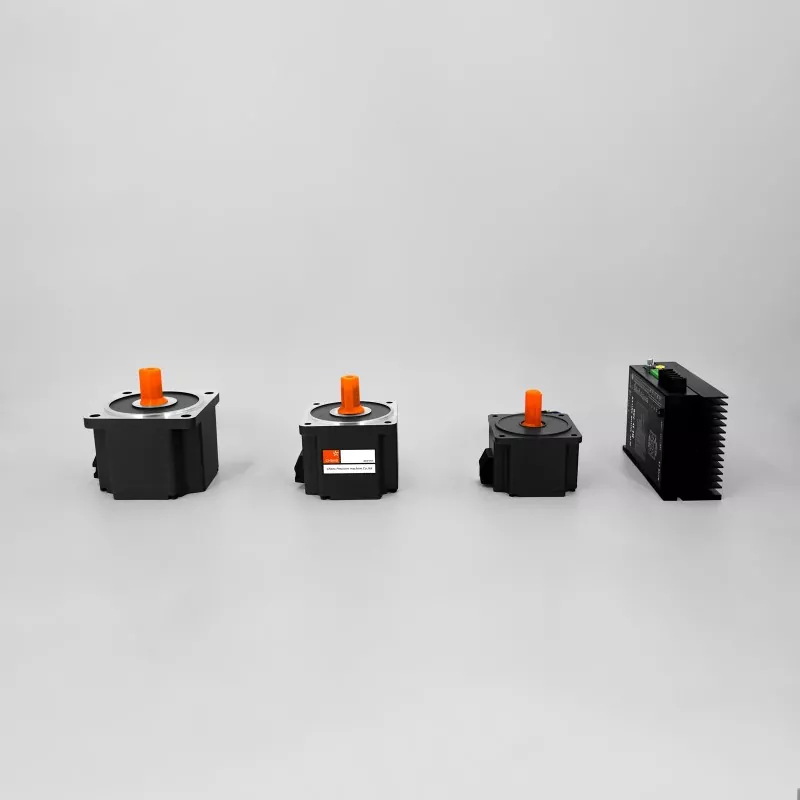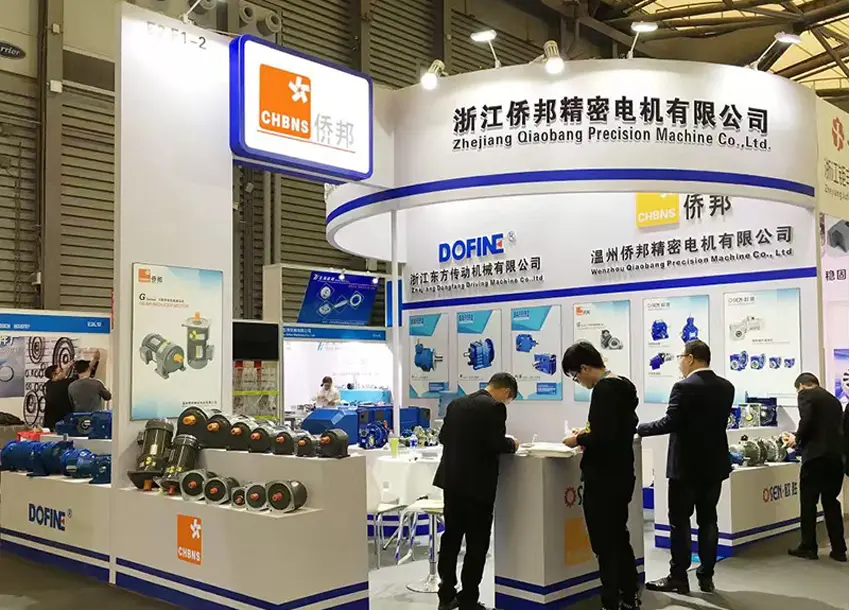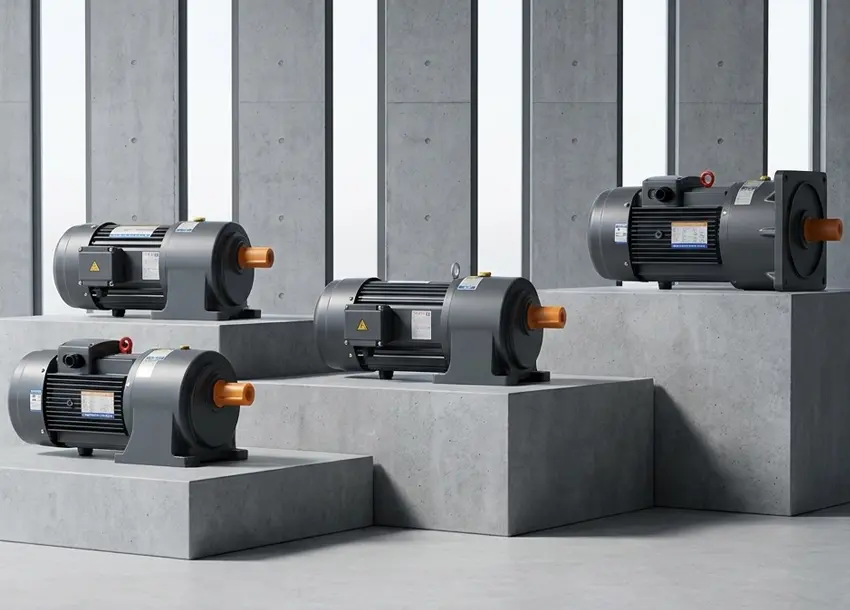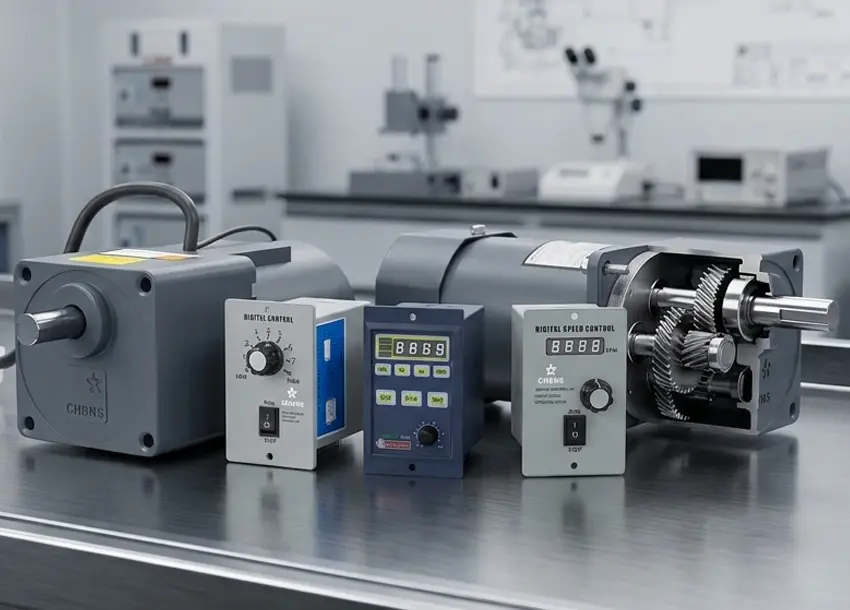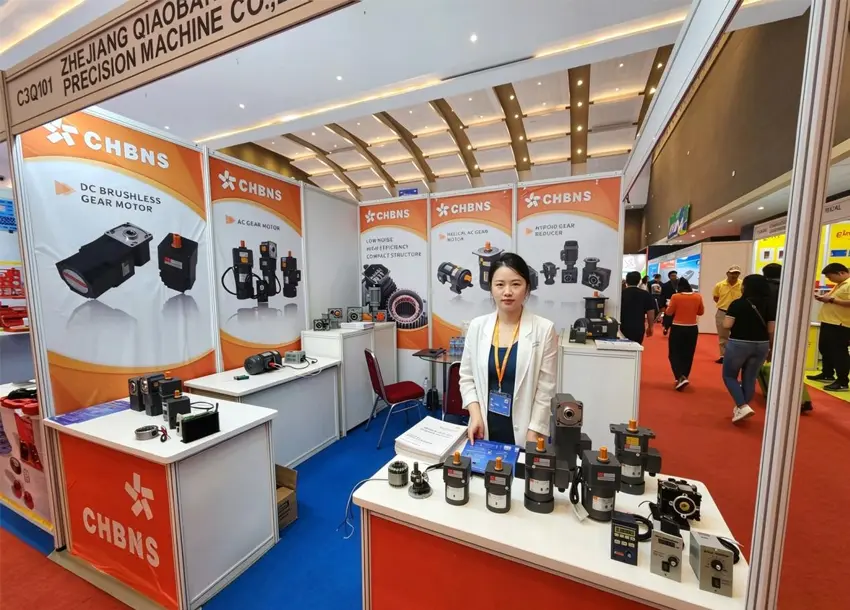
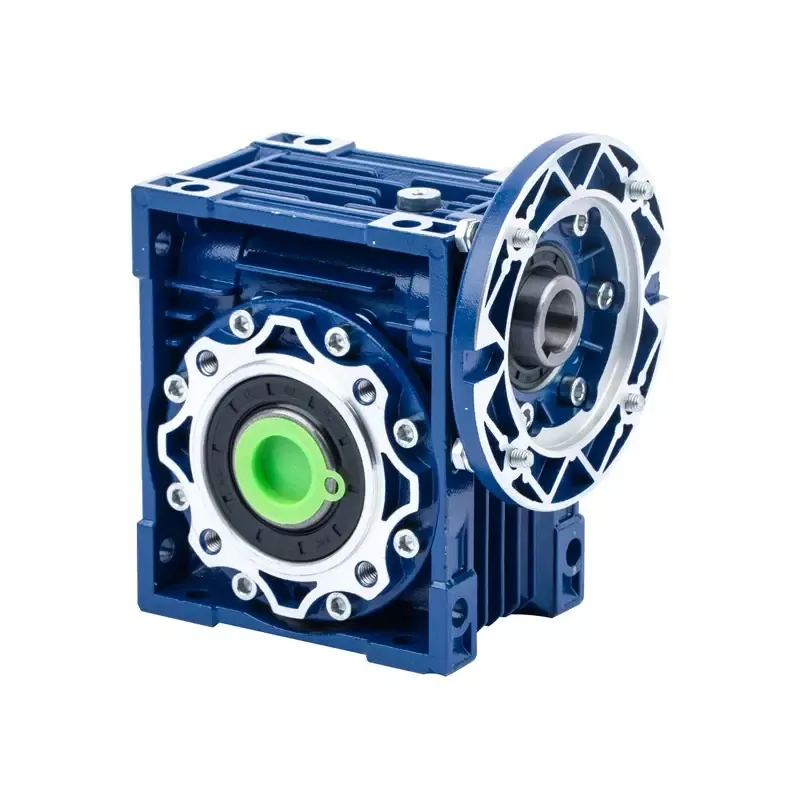
For OEM teams working inside a restricted envelope, CHBNS supplies the Compact Worm Gear Motor from its China factory as the responsible manufacturer and system supplier. The NMRV catalog documents the reducer family, dimensions, mounting arrangements, selection tables, and accessories; the selected motor, adapter, ratio, load capacity, thermal duty, brake, and electrical details remain tied to the confirmed order.
Check the available envelope, motor-side clearance, hollow-output connection, reaction support, service path, and real speed-load cycle before choosing a frame or ratio.
The core benefit is a short, understandable right-angle power path whose interfaces can be reviewed together; it is not a universal promise about efficiency, noise, temperature, or service life.
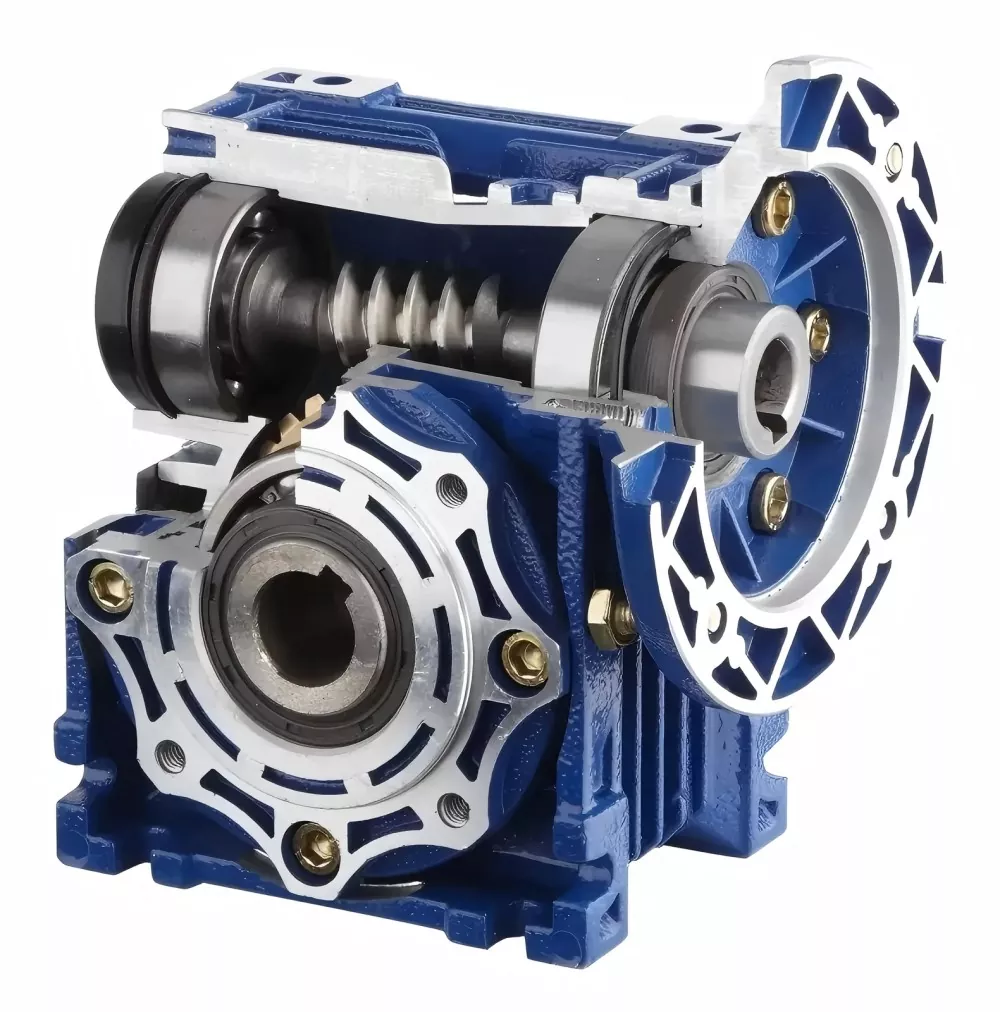
The worm input and wheel output are arranged on perpendicular axes, helping the motor sit alongside the machine instead of extending the output line further.
Input flange, motor speed, ratio, output bore, reaction restraint, and electrical supply can be closed in one quotation trail, reducing coordination gaps.
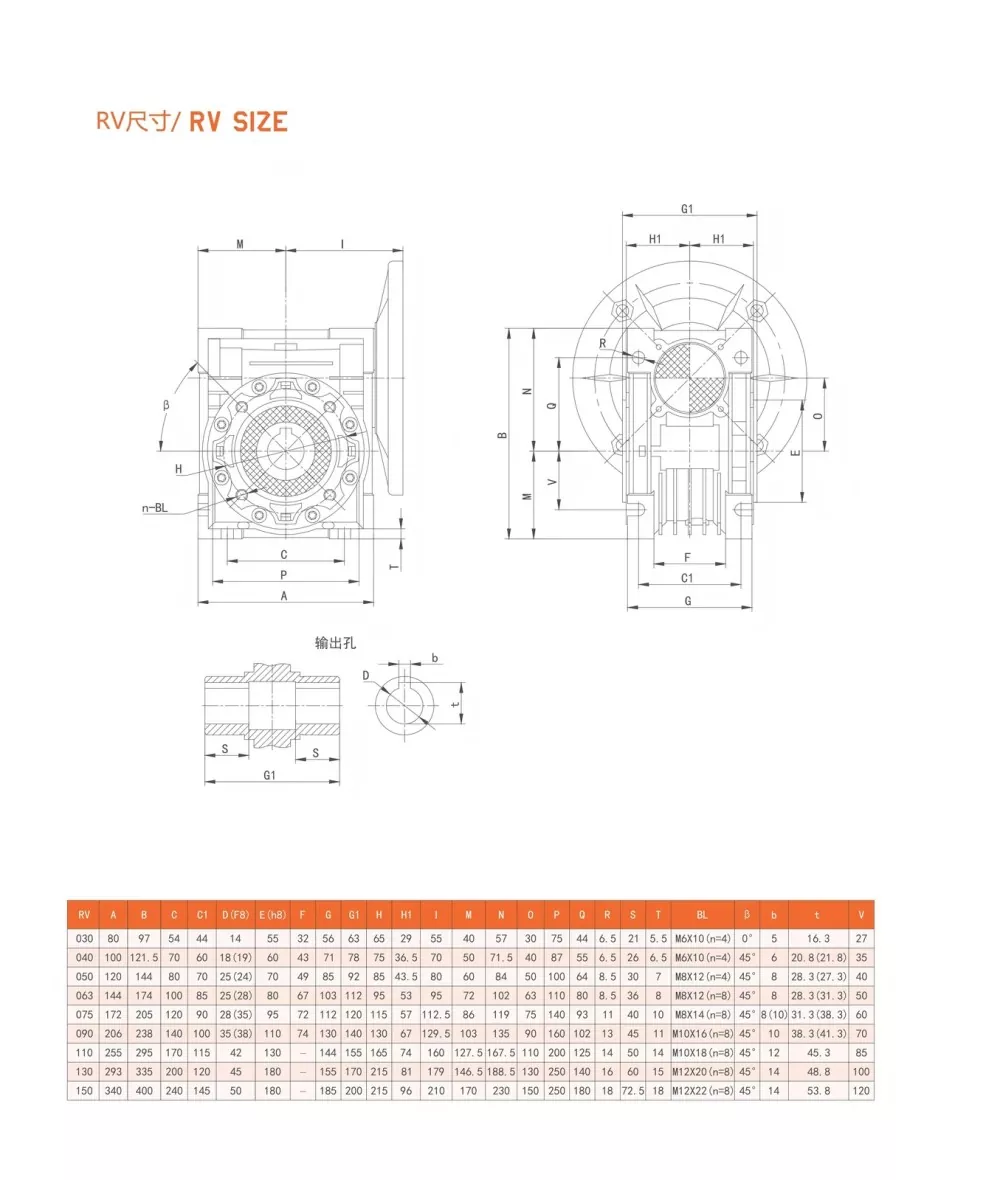
The formal catalog presents NMRV size drawings and dimensional tables, giving equipment builders a documented starting point before an order drawing is issued.
The housing, input flange, hollow output, fasteners, and mounting faces are externally identifiable, so access and withdrawal can be discussed before the frame is built.
Compactness is useful only when mechanical, thermal, and electrical responsibilities remain visible.
Record the housing envelope, motor projection, cable bend space, guards, adjacent frames, and the direction needed to withdraw the drive for service.
Supply normal speed and load, starting demand, short peaks, reversals, starts per hour, daily runtime, and any jam or holding condition.
Select the NMRV size, ratio, input flange, motor supply, power, protection, and control method as a connected configuration rather than isolated catalog items.
Freeze the order code, interface drawing, wiring scope, inspection items, acceptance record, packing method, and any remaining conditions in the quotation.
Family evidence establishes architecture and selection inputs. Ordered-model performance still requires the matching table, drawing, motor data, and acceptance agreement.
| Evidence item | Published or visible reference | Interpretation boundary |
|---|---|---|
| Published family | NMRV series section, catalog pages 31-50 | The section contains overview, model logic, parameters, construction, dimensions, mounting, selection tables, and accessory pages. |
| Size-family evidence | RV030, 040, 050, 063, 075, 090, 110, 130, and 150 appear in the size table | A listed size is not proof that every motor, ratio, accessory, or duty combination is available. |
| Reducer architecture | Cutaway image and CAD video show the worm, wheel, bearings, housing, and hollow output | They explain the reduction stage only and do not prove the complete motorized assembly. |
| Motor-side interface | Catalog input-accessory pages and visible input flange | Final adapter, motor type, voltage, power, and control scope must be named in the quotation. |
| Product photography | Local photographs show CHBNS NMRV reducer appearance and flange geometry | The hero photograph omits the motor and is captioned as the reducer stage within the package. |
Final performance follows the confirmed model, controller, ratio, duty and test agreement.
Application names are starting points. Final suitability depends on measured load, duty, environment, interfaces, guarding, and safety design.
A side-mounted input can help where the output shaft line has little spare length; shaft support and start-stop duty still need review.
Use the complete envelope, cable space, access doors, and removal route to confirm that compact assembly remains serviceable.
Provide material load variation, starts, jams, and daily hours so ratio and thermal duty are not chosen from nominal speed alone.
The architecture can simplify direction change when positioning accuracy, braking, and safety functions are handled by the complete machine design.
This compares procurement processes, not inherent architectures: a low-information external route may lack a controlled combination drawing, stated interface tolerances, named responsibility, and revision control.
Lower-feature external optionA generic assembly may be selected from separate motor and reducer outlines without one removal envelope.
CHBNS review pathThe review records housing, motor projection, cables, guards, and withdrawal direction together.
Lower-feature external optionAdapter, alignment, output connection, and reaction restraint can fall between suppliers.
CHBNS review pathOne configuration record links the motor side, reduction stage, and machine shaft.
Lower-feature external optionA listing photograph may stand in for drawings, duty limits, and an acceptance scope.
CHBNS review pathCatalog pages, order drawing, quotation conditions, and inspection items remain distinguishable.
Lower-feature external optionSeparate sourcing can suit a builder with proven adapters, drawings, tests, and integration ownership.
CHBNS review pathCoordinated sourcing is useful when the buyer wants fewer unresolved mechanical and electrical interfaces.
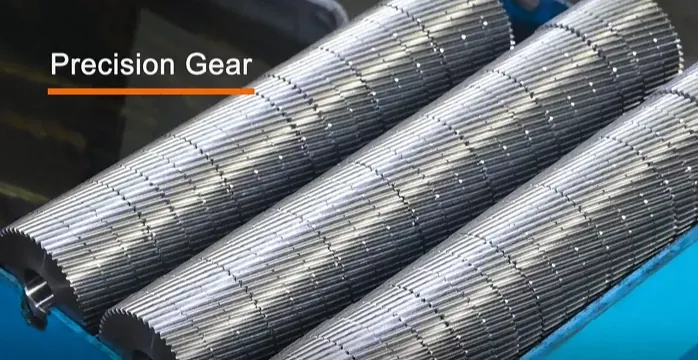
Production imagery provides process context, while order quality is controlled by the approved drawing and agreed checks. The buyer should define which dimensions, rotation direction, visible condition, running observations, documentation, and records are required before release.
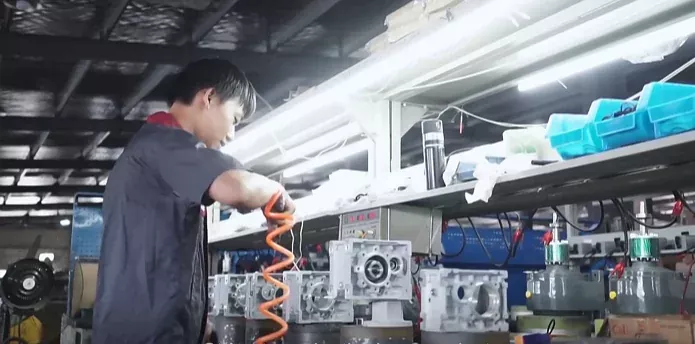
Use family pages for screening and request the final order drawing before releasing a machine interface.
The local video shows reducer housing and internal-component assembly in an engineering interface. It supports structure discussion only; no complete motor, controller, or variable-speed hardware appears.
Seal and protect the hollow output, machined flange, motor-side opening, and loose accessories. Confirm quantity, unit mass, moisture protection, labels, destination, handling method, and whether cartons, pallets, or wooden crates are required for the actual shipment.
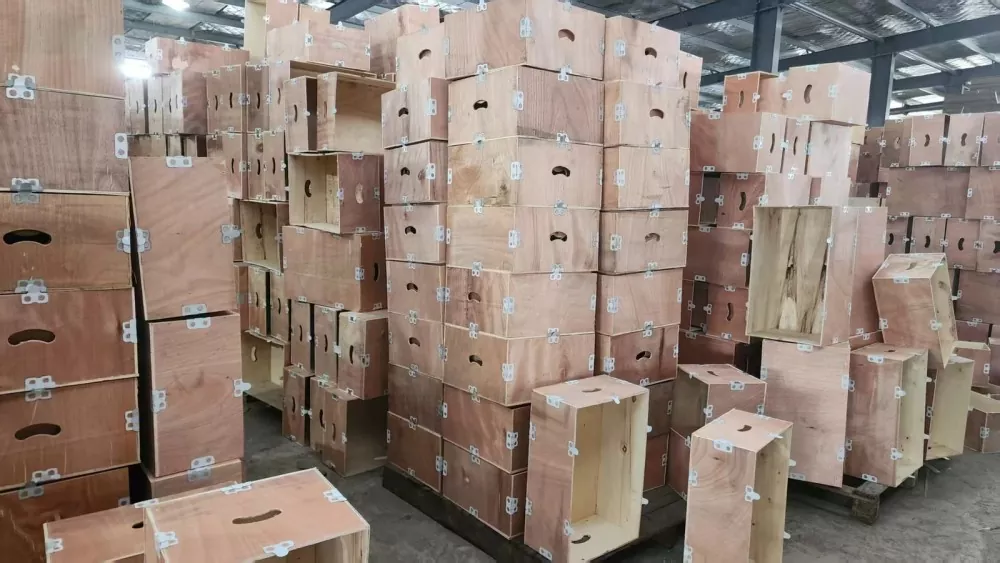
The value lies in documented coordination, not a broad company claim.
The factory discussion can cover reducer size, motor side, output connection, duty, drawing, inspection, and packing in one controlled scope.
Published NMRV pages are supplied with the product page so buyers can distinguish family data from final order values.
Unconfirmed performance, control, certification, lead time, and warranty items remain questions instead of being converted into marketing claims.
A target output RPM is not enough. Provide the operating map and both sides of the physical interface so the supplier can identify conflicts before quotation.
Each answer remains conditional on the approved order code and application data.
Start with the machine envelope, output speed-load map, mounting and shaft interfaces, duty, motor supply, control and braking needs, environment, and acceptance documents. The family name or a product photograph cannot establish the final configuration.
No. The product images and video in this page show the NMRV reduction stage and its interfaces. The motor and adapter are selected separately and confirmed on the order drawing.
No. Do not assume safety self-locking from the architecture. Back-driving depends on geometry, ratio, lubrication, wear, vibration, and load; use a rated brake and machine safety design where holding matters.
It is suitable for family screening, but fabrication and interchangeability require the confirmed model drawing, tolerances, accessories, and revision.
Send its flange, pilot, shaft, speed, torque, supply, and control data. Compatibility must be reviewed rather than inferred from frame size alone.
Address
No.785 Jiangnan Road, Nanmingshan street, Liandu district, Lishui City, Zhejiang Province , China.
Tel